Amplify- AI Creative Marketing
Amplify - AI Creative Marketing

Project Done at AI Verticle of PagarBook
Project year
2026
Project Duration
6 Weeks
Category
B2B
Platform
Saas (Web)
Status
Live
Project year
2026
Project Duration
6 Weeks
Category
B2B
Platform
Saas (Web)
Status
Live
View Next Project
Flyr- AI Image Creator
Turning a Shopify Catalogue into a Creative Pipeline for US and European MArket
Turning a Shopify Catalogue into a Creative Pipeline for US and European MArket


Stores Connected
88
Stores Connected
88

MRR
$ 8K
MRR
$ 8K

Creatives Published
4K+
Creatives Published
4K+
MRR
$ 8K
Creatives Published
4K+
Stores Connected
88
What is the Product
Amplify is an agent that connects to a Shopify store and turns its catalogue into ad creative images, video, in batch, published back to the store. Built for merchants whose constraint is volume, not skill.

Difference From Flyr
Flyr worked, so the obvious move was to translate it — same flow, English copy, dollar pricing.
But Flyr was built around a seller who couldn't describe what they wanted. A merchant in Ohio or Rotterdam can, and plenty of them have brand guidelines to prove it. Every constraint the product was shaped around had evaporated and so had the reason for its shape.
Why this market, and not the one we already had
The product costs more to run
The need only recurs where people buy ads
That TAM price doesn't exist in India
If the point of the creative is to run as an ad, the product shouldn't stop at a download. Amplify writes back to Shopify, and connects to Meta so campaign creative can be pushed without the merchant exporting anything.
Instagram we didn't get to say what merchants still upload manually there. Worth naming rather than glossing: the loop closes on two channels and not the third, and that's a real gap in the product rather than a rounding error.
Why the integrations matter
If the point of the creative is to run as an ad, the product shouldn't stop at a download. Amplify writes back to Shopify, and connects to Meta so campaign creative can be pushed without the merchant exporting anything.
Control
Who Sees
Intent
Question its Answers
Attention available
Its job
The listing image
Someone who already clicked
They came looking
"Is this right for me?"
Minutes, and willingly
Remove doubt
The ad creative
Someone who was scrolling past
They were interrupted
"Why should I care?"
Under a second, unwillingly
Create want

Userbase Difference

Indian Market
Has 1.2 Lakh Shopify Accounts
10-12 SKU
Creatives needed per month 70-100
Maketing Tool can charge upto ₹650 / ~$7



US based Market
Has 11.5 Lakh Shopify Accounts
50-60 SKU
Creatives needed per month 300-400
Maketing Tool can charge upto $500

Key Questions that needed Answers
Q1: If they can already make a good image, what's actually stopping them?
Q2: How does a creative actually get from idea to live listing?
Q3: How much do they want to decide, and how much do they want handled?
Q4: Would anyone let software write to their live store?
All four needed the same thing: going and looking. So that's where I started — with the listings, and then with the people behind them.
The Research
20–30 studies with merchants across the US and Europe add the split, and the range of store sizes. Not about images. About how a product gets from a supplier into a live listing with a photograph attached, and what goes wrong in between.
Because we sold this ourselves, one conversation at a time, I was also on every sales call and every onboarding. N of them. That's an unusual amount of contact with the people you're designing for, and it's where most of what follows came from.
How Business was ran
Nobody could describe their process in one go. Everyone could describe it if you asked what happened to one specific product. So I mapped it product by product, and the same nine steps came back every time.

What this told us
Break A is a gap that never gets filled. Step 3 is the one with no deadline attached, so it's the one that slides — and a product that went live with a supplier photo tends to stay that way. Nobody decided that. It's just what happens when the listing already works well enough.
Break B is a loop that can't be run often enough. Steps 6 through 9 have to repeat every few weeks per ad set, forever, and there is no version of a small team that keeps up with it. So the creative gets old and the merchant watches the numbers fall.
Insights from the User Research

They don't need help making a good image. They need four hundred of them, and again next month.
Volume became the product, not quality. Batch generation, batch editing and batch publishing stopped being power-user features and became the primary interaction.

Making the image was the fast part. Everything around it was the job.
Amplify had to own the whole loop, not the creative step. Which is why it connects to Shopify and writes back, rather than handing you a download.

They'll hand over the work. They won't hand over the judgment.
Real editing controls, deliberately — the lighting, crop and colour that Flyr took away. And an approval step that can't be skipped.

The store is revenue. Nothing writes to it without a human saying yes.
The agent proposes; the merchant publishes. Autonomy was never the goal, and the queue exists because of this conversation.
In India I was solving for a seller who couldn't make one good image.
Here the merchant can make a great one they just can't stop.
Who this is for
A Shopify merchant in the US or Europe running 12 -14 SKUs, with a team of 3 / no marketing hire. They're spending on paid social, so their creative burns out on a schedule. New stock arrives weekly / monthly and goes live with whatever image the supplier sent.
They know what good looks like. They've often paid for it before a photographer, an agency, a freelancer on retainer and stopped, because the maths stopped working at catalogue scale.

The problem I was solving
These merchants aren't short of taste, tools or ideas. They're short of hours, and the shortage compounds: every new product needs images, every ad set needs fresh creative, and every one that gets made has to be reviewed, uploaded and attached to a listing by hand.
What I was solving for wasn't making creative.
It was closing the distance between a product sitting in an inventory and a finished creative sitting on its listing without the merchant having to start anything, and without software ever publishing on its own.
Problems to Solve
Review, not generation
Uploading, not making
Marketing vs Listings
No feedback loop
Creative decays weekly
Why the tools that exist don't work here
The Observation


They're destinations. This is a connection.
PhotoRoom gives a seller background removal, AI shadows, recolour and product staging, then trusts them to compose something good. Our seller has no reference for what good looks like.

They end at a download. This ends on the listing.
Every one of them hands back a file. The part merchants described as the actual work getting that file onto the right product, on the live store is left to them. One-click write-back to Shopify isn't a convenience feature; it's the half of the job nobody else was doing.

They style from a library. We ground in a category
Templates and presets come from what looks good in general. Amplify reads what's actually running and spending in that merchant's own category competitor creative and the Meta Ad Library.
Decision 1 - The Store
Connect → catalogue populated
Dirtect aut connection to Shopify , that would allow us to directely get the users catalogue.

Decision 2 - Automations
Rejection has to be cheap and specific —
what did you actually build here?Bulk approve with confident defaults — the common case is "these are all fine"
Anything rejected has to teach the system something —
did it? be honest if notThe queue can never be intimidating — 400 pending items is a burden, not a benefit;
how did you pace it?

Decision 3 - The Control
On Flyr I removed lighting, lens, camera angle and colour grade, on the grounds that the seller had no basis to choose and every control was a chance to make the output worse.
This merchant has a brand, a palette, a look they've paid for before and the vocabulary to describe it. Handing them three questions would read as a toy. The same reasoning produced opposite answers, because the reasoning was never about how many controls are correct — it was about whether the person's judgment beats the system's.

Designs Iterations
Dashboard

Image Creation Flow


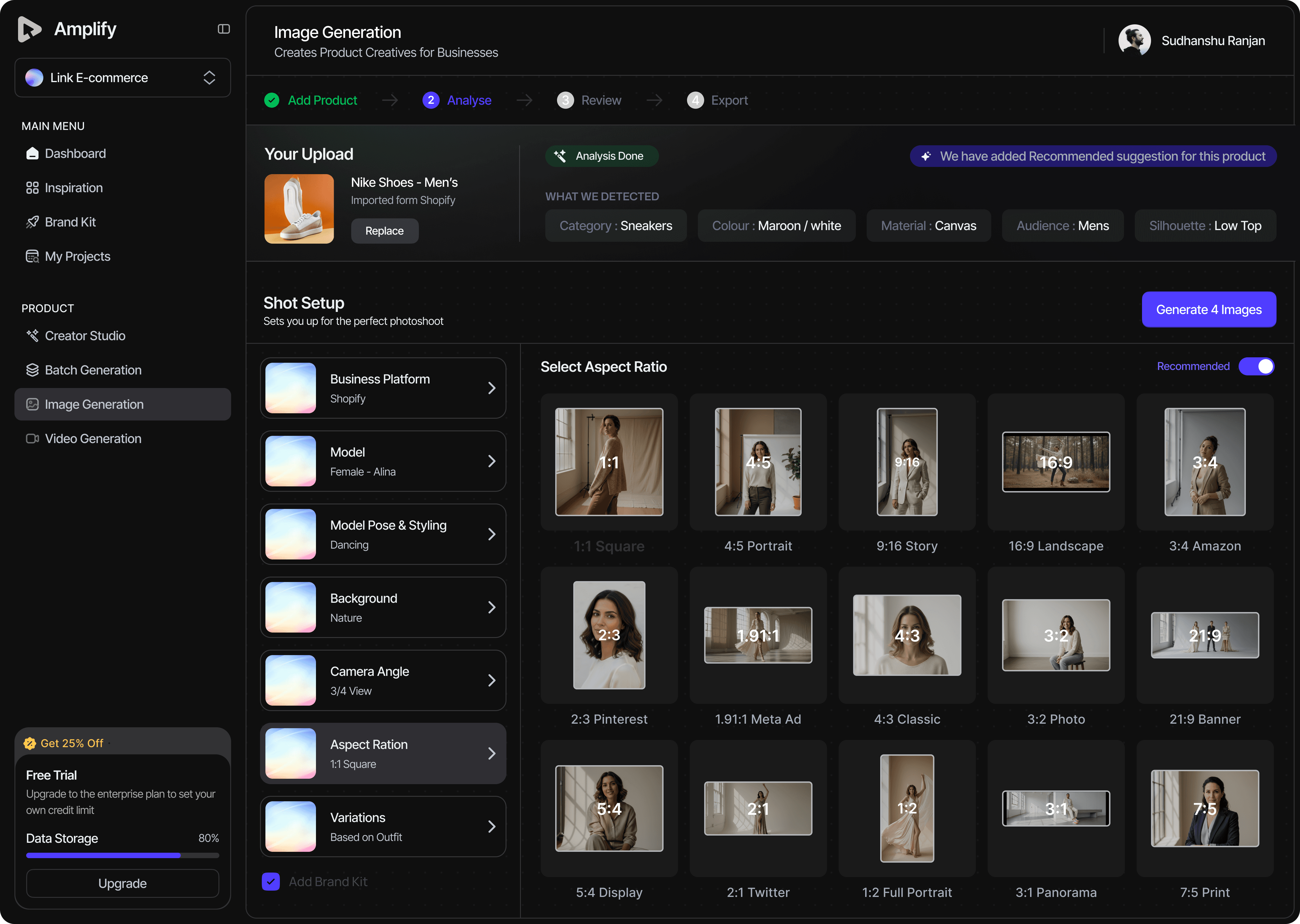


Batch Generation Flow


Brand Kit Flow
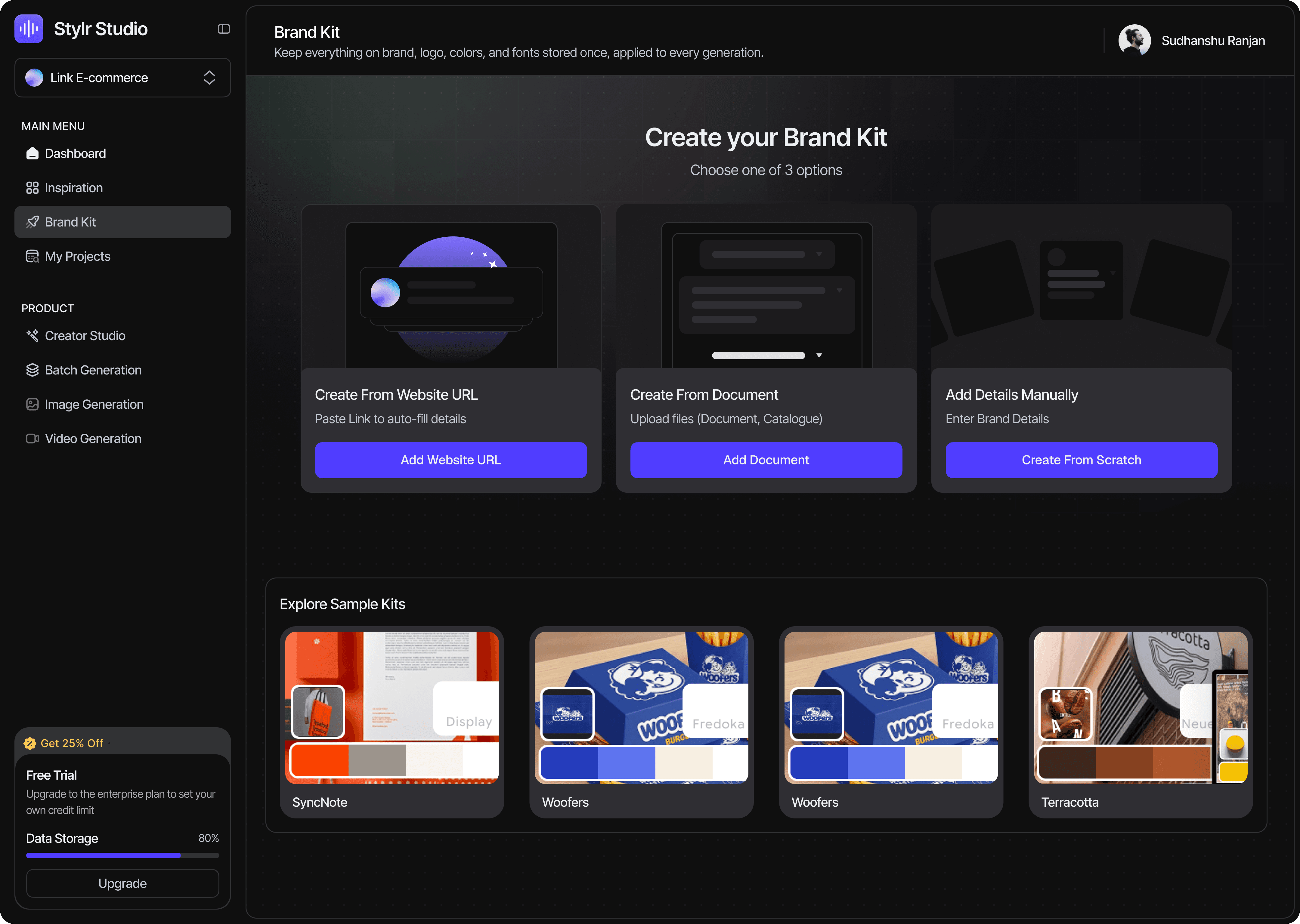


Editing Flow


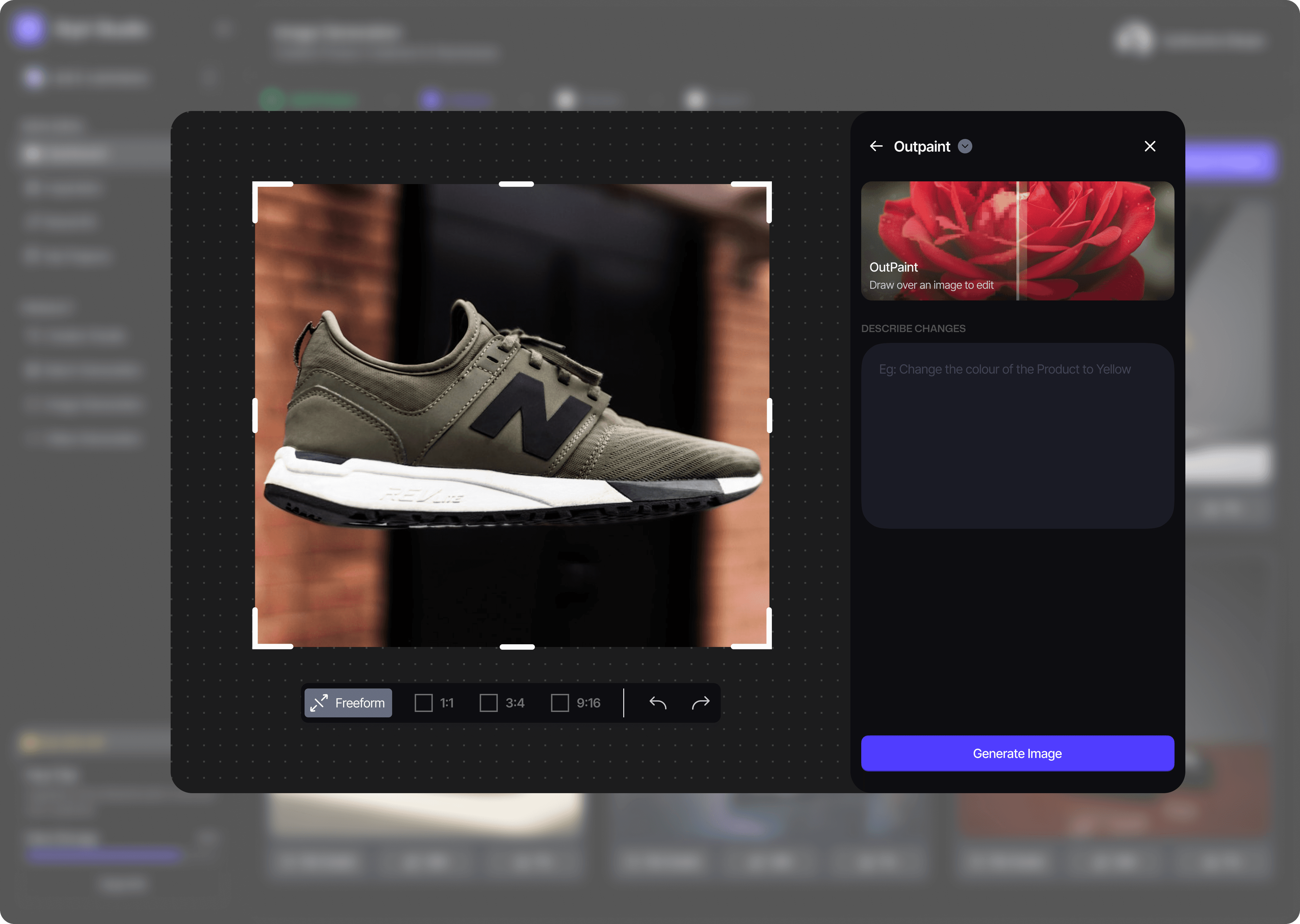


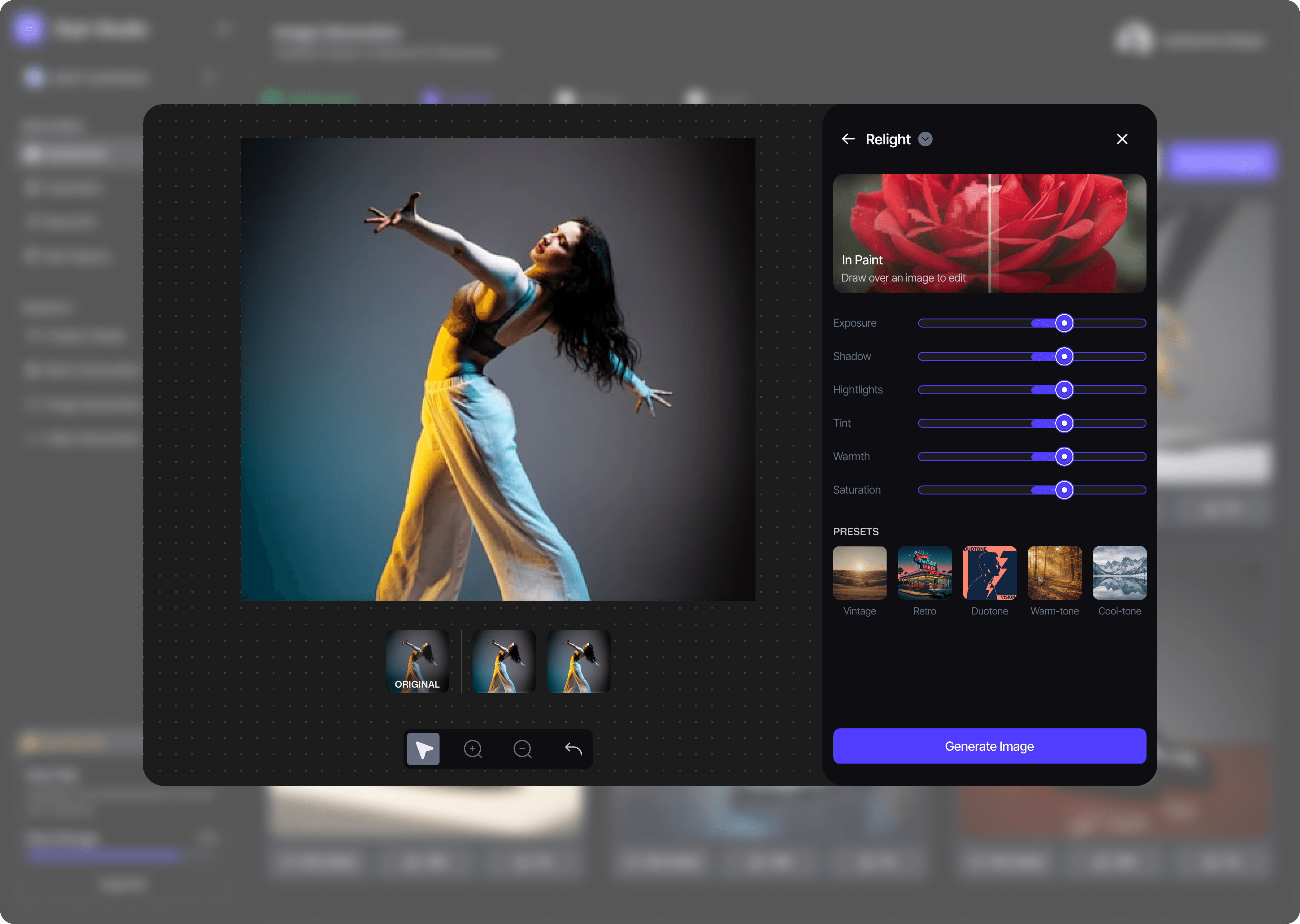

Catalogue Management flow




My Learnings
I thought I could translate Flyr. Almost nothing transferred the two users wanted opposite things.
I thought making the images was the hard part. Uploading them was I'd designed the fun step, not the slow one.
I thought more automation would help. It gave merchants more to review faster isn't help if a human still has to say yes.
I thought connecting Shopify would be the easy step. It was the scariest thing we asked for I was asking for their revenue, not their data.
MRR
$ 8K
Creatives Published
4K+
Stores Connected
88
What is the Product
Amplify is an agent that connects to a Shopify store and turns its catalogue into ad creative images, video, in batch, published back to the store. Built for merchants whose constraint is volume, not skill.
Difference From Flyr
Flyr worked, so the obvious move was to translate it — same flow, English copy, dollar pricing.
But Flyr was built around a seller who couldn't describe what they wanted. A merchant in Ohio or Rotterdam can, and plenty of them have brand guidelines to prove it. Every constraint the product was shaped around had evaporated and so had the reason for its shape.
Why this market, and not the one we already had
The product costs more to run
The need only recurs where people buy ads
That TAM price doesn't exist in India
If the point of the creative is to run as an ad, the product shouldn't stop at a download. Amplify writes back to Shopify, and connects to Meta so campaign creative can be pushed without the merchant exporting anything.
Instagram we didn't get to say what merchants still upload manually there. Worth naming rather than glossing: the loop closes on two channels and not the third, and that's a real gap in the product rather than a rounding error.
Why the integrations matter
If the point of the creative is to run as an ad, the product shouldn't stop at a download. Amplify writes back to Shopify, and connects to Meta so campaign creative can be pushed without the merchant exporting anything.
Control
Who Sees
Intent
Question its Answers
Attention available
Its job
The listing image
Someone who already clicked
They came looking
"Is this right for me?"
Minutes, and willingly
Remove doubt
The ad creative
Someone who was scrolling past
They were interrupted
"Why should I care?"
Under a second, unwillingly
Create want
Userbase Difference
Indian Market
Has 1.2 Lakh Shopify Accounts
10-12 SKU
Creatives needed per month 70-100
Maketing Tool can charge upto ₹650 / ~$7
US based Market
Has 11.5 Lakh Shopify Accounts
50-60 SKU
Creatives needed per month 300-400
Maketing Tool can charge upto $500
Key Questions that needed Answers
Q1: If they can already make a good image, what's actually stopping them?
Q2: How does a creative actually get from idea to live listing?
Q3: How much do they want to decide, and how much do they want handled?
Q4: Would anyone let software write to their live store?
All four needed the same thing: going and looking. So that's where I started — with the listings, and then with the people behind them.
The Research
20–30 studies with merchants across the US and Europe add the split, and the range of store sizes. Not about images. About how a product gets from a supplier into a live listing with a photograph attached, and what goes wrong in between.
Because we sold this ourselves, one conversation at a time, I was also on every sales call and every onboarding. N of them. That's an unusual amount of contact with the people you're designing for, and it's where most of what follows came from.
How Business was ran
Nobody could describe their process in one go. Everyone could describe it if you asked what happened to one specific product. So I mapped it product by product, and the same nine steps came back every time.
What this told us
Break A is a gap that never gets filled. Step 3 is the one with no deadline attached, so it's the one that slides — and a product that went live with a supplier photo tends to stay that way. Nobody decided that. It's just what happens when the listing already works well enough.
Break B is a loop that can't be run often enough. Steps 6 through 9 have to repeat every few weeks per ad set, forever, and there is no version of a small team that keeps up with it. So the creative gets old and the merchant watches the numbers fall.
Insights from the User Research
They don't need help making a good image. They need four hundred of them, and again next month.
Volume became the product, not quality. Batch generation, batch editing and batch publishing stopped being power-user features and became the primary interaction.
Making the image was the fast part. Everything around it was the job.
Amplify had to own the whole loop, not the creative step. Which is why it connects to Shopify and writes back, rather than handing you a download.
They'll hand over the work. They won't hand over the judgment.
Real editing controls, deliberately — the lighting, crop and colour that Flyr took away. And an approval step that can't be skipped.
The store is revenue. Nothing writes to it without a human saying yes.
The agent proposes; the merchant publishes. Autonomy was never the goal, and the queue exists because of this conversation.
In India I was solving for a seller who couldn't make one good image.
Here the merchant can make a great one they just can't stop.
Who this is for
A Shopify merchant in the US or Europe running 12 -14 SKUs, with a team of 3 / no marketing hire. They're spending on paid social, so their creative burns out on a schedule. New stock arrives weekly / monthly and goes live with whatever image the supplier sent.
They know what good looks like. They've often paid for it before a photographer, an agency, a freelancer on retainer and stopped, because the maths stopped working at catalogue scale.
The problem I was solving
These merchants aren't short of taste, tools or ideas. They're short of hours, and the shortage compounds: every new product needs images, every ad set needs fresh creative, and every one that gets made has to be reviewed, uploaded and attached to a listing by hand.
What I was solving for wasn't making creative.
It was closing the distance between a product sitting in an inventory and a finished creative sitting on its listing without the merchant having to start anything, and without software ever publishing on its own.
Problems to Solve
Review, not generation
Uploading, not making
Marketing vs Listings
No feedback loop
Creative decays weekly
Why the tools that exist don't work here
The Observation
They're destinations. This is a connection.
PhotoRoom gives a seller background removal, AI shadows, recolour and product staging, then trusts them to compose something good. Our seller has no reference for what good looks like.
They end at a download. This ends on the listing.
Every one of them hands back a file. The part merchants described as the actual work getting that file onto the right product, on the live store is left to them. One-click write-back to Shopify isn't a convenience feature; it's the half of the job nobody else was doing.
They style from a library. We ground in a category
Templates and presets come from what looks good in general. Amplify reads what's actually running and spending in that merchant's own category competitor creative and the Meta Ad Library.
Decision 1 - The Store
The Observation
Dirtect aut connection to Shopify , that would allow us to directely get the users catalogue.
Decision 2 - Automations
Rejection has to be cheap and specific —
what did you actually build here?Bulk approve with confident defaults — the common case is "these are all fine"
Anything rejected has to teach the system something —
did it? be honest if notThe queue can never be intimidating — 400 pending items is a burden, not a benefit;
how did you pace it?
Decision 3 - The Control
On Flyr I removed lighting, lens, camera angle and colour grade, on the grounds that the seller had no basis to choose and every control was a chance to make the output worse.
This merchant has a brand, a palette, a look they've paid for before and the vocabulary to describe it. Handing them three questions would read as a toy. The same reasoning produced opposite answers, because the reasoning was never about how many controls are correct — it was about whether the person's judgment beats the system's.
Designs Iterations
Dashboard
Image Creation Flow
Batch Generation Flow
Brand Kit Flow
Editing Flow
Catalogue Management flow
My Learnings
I thought I could translate Flyr. Almost nothing transferred the two users wanted opposite things.
I thought making the images was the hard part. Uploading them was I'd designed the fun step, not the slow one.
I thought more automation would help. It gave merchants more to review faster isn't help if a human still has to say yes.
I thought connecting Shopify would be the easy step. It was the scariest thing we asked for I was asking for their revenue, not their data.
MRR
$ 8K
Creatives Published
4K+
Stores Connected
88
What is the Product
Amplify is an agent that connects to a Shopify store and turns its catalogue into ad creative images, video, in batch, published back to the store. Built for merchants whose constraint is volume, not skill.
Difference From Flyr
Flyr worked, so the obvious move was to translate it — same flow, English copy, dollar pricing.
But Flyr was built around a seller who couldn't describe what they wanted. A merchant in Ohio or Rotterdam can, and plenty of them have brand guidelines to prove it. Every constraint the product was shaped around had evaporated and so had the reason for its shape.
Why this market, and not the one we already had
The product costs more to run
The need only recurs where people buy ads
That TAM price doesn't exist in India
If the point of the creative is to run as an ad, the product shouldn't stop at a download. Amplify writes back to Shopify, and connects to Meta so campaign creative can be pushed without the merchant exporting anything.
Instagram we didn't get to say what merchants still upload manually there. Worth naming rather than glossing: the loop closes on two channels and not the third, and that's a real gap in the product rather than a rounding error.
Why the integrations matter
If the point of the creative is to run as an ad, the product shouldn't stop at a download. Amplify writes back to Shopify, and connects to Meta so campaign creative can be pushed without the merchant exporting anything.
Control
Who Sees
Intent
Question its Answers
Attention available
Its job
The listing image
Someone who already clicked
They came looking
"Is this right for me?"
Minutes, and willingly
Remove doubt
The ad creative
Someone who was scrolling past
They were interrupted
"Why should I care?"
Under a second, unwillingly
Create want
Userbase Difference
Indian Market
Has 1.2 Lakh Shopify Accounts
10-12 SKU
Creatives needed per month 70-100
Maketing Tool can charge upto ₹650 / ~$7
US based Market
Has 11.5 Lakh Shopify Accounts
50-60 SKU
Creatives needed per month 300-400
Maketing Tool can charge upto $500
Key Questions that needed Answers
Q1: If they can already make a good image, what's actually stopping them?
Q2: How does a creative actually get from idea to live listing?
Q3: How much do they want to decide, and how much do they want handled?
Q4: Would anyone let software write to their live store?
All four needed the same thing: going and looking. So that's where I started — with the listings, and then with the people behind them.
The Research
20–30 studies with merchants across the US and Europe add the split, and the range of store sizes. Not about images. About how a product gets from a supplier into a live listing with a photograph attached, and what goes wrong in between.
Because we sold this ourselves, one conversation at a time, I was also on every sales call and every onboarding. N of them. That's an unusual amount of contact with the people you're designing for, and it's where most of what follows came from.
How Business was ran
Nobody could describe their process in one go. Everyone could describe it if you asked what happened to one specific product. So I mapped it product by product, and the same nine steps came back every time.
What this told us
Break A is a gap that never gets filled. Step 3 is the one with no deadline attached, so it's the one that slides — and a product that went live with a supplier photo tends to stay that way. Nobody decided that. It's just what happens when the listing already works well enough.
Break B is a loop that can't be run often enough. Steps 6 through 9 have to repeat every few weeks per ad set, forever, and there is no version of a small team that keeps up with it. So the creative gets old and the merchant watches the numbers fall.
Insights from the User Research
They don't need help making a good image. They need four hundred of them, and again next month.
Volume became the product, not quality. Batch generation, batch editing and batch publishing stopped being power-user features and became the primary interaction.
Making the image was the fast part. Everything around it was the job.
Amplify had to own the whole loop, not the creative step. Which is why it connects to Shopify and writes back, rather than handing you a download.
They'll hand over the work. They won't hand over the judgment.
Real editing controls, deliberately — the lighting, crop and colour that Flyr took away. And an approval step that can't be skipped.
The store is revenue. Nothing writes to it without a human saying yes.
The agent proposes; the merchant publishes. Autonomy was never the goal, and the queue exists because of this conversation.
In India I was solving for a seller who couldn't make one good image.
Here the merchant can make a great one they just can't stop.
Who this is for
A Shopify merchant in the US or Europe running 12 -14 SKUs, with a team of 3 / no marketing hire. They're spending on paid social, so their creative burns out on a schedule. New stock arrives weekly / monthly and goes live with whatever image the supplier sent.
They know what good looks like. They've often paid for it before a photographer, an agency, a freelancer on retainer and stopped, because the maths stopped working at catalogue scale.
The problem I was solving
These merchants aren't short of taste, tools or ideas. They're short of hours, and the shortage compounds: every new product needs images, every ad set needs fresh creative, and every one that gets made has to be reviewed, uploaded and attached to a listing by hand.
What I was solving for wasn't making creative.
It was closing the distance between a product sitting in an inventory and a finished creative sitting on its listing without the merchant having to start anything, and without software ever publishing on its own.
Problems to Solve
Review, not generation
Uploading, not making
Marketing vs Listings
No feedback loop
Creative decays weekly
Why the tools that exist don't work here
The Observation
They're destinations. This is a connection.
PhotoRoom gives a seller background removal, AI shadows, recolour and product staging, then trusts them to compose something good. Our seller has no reference for what good looks like.
They end at a download. This ends on the listing.
Every one of them hands back a file. The part merchants described as the actual work getting that file onto the right product, on the live store is left to them. One-click write-back to Shopify isn't a convenience feature; it's the half of the job nobody else was doing.
They style from a library. We ground in a category
Templates and presets come from what looks good in general. Amplify reads what's actually running and spending in that merchant's own category competitor creative and the Meta Ad Library.
Decision 1 - The Store
Connect → catalogue populated
Dirtect aut connection to Shopify , that would allow us to directely get the users catalogue.
Decision 2 - Automations
Rejection has to be cheap and specific —
what did you actually build here?Bulk approve with confident defaults — the common case is "these are all fine"
Anything rejected has to teach the system something —
did it? be honest if notThe queue can never be intimidating — 400 pending items is a burden, not a benefit;
how did you pace it?
Decision 3 - The Control
On Flyr I removed lighting, lens, camera angle and colour grade, on the grounds that the seller had no basis to choose and every control was a chance to make the output worse.
This merchant has a brand, a palette, a look they've paid for before and the vocabulary to describe it. Handing them three questions would read as a toy. The same reasoning produced opposite answers, because the reasoning was never about how many controls are correct — it was about whether the person's judgment beats the system's.
Designs Iterations
Dashboard