EasyBill- Digital POS
EasyBill - Digital POS

Project Done at AI Verticle of PagarBook
Project year
2026
Project Duration
3 Weeks
Category
B2B
Platform
Mobile
Status
Live
Project year
2026
Project Duration
3 Weeks
Category
B2B
Platform
Mobile
Status
Live
View Next Project
Flyr- AI Image Creator
Turning Every Bill Into a Ledger
Turning Every Bill Into a Ledger


M1 Retention
66%
M1 Retention
66%

Bills per shop per day
44
Bills per shop per day
44

MRR
45L +
MRR
45L +
MRR
3 Cr.+
Paying Users
16K
M3 Retention
58%
What is the Product
EasyBill turns a shopkeeper's phone into his billing counter. He photographs his shelves once to build a catalogue, then bills like he's ordering on Zepto tap rice, four kilos, add, done. The customer scans a QR and the bill lands on their WhatsApp. No printer, no paper, no POS machine.
From any random click to e- Commerce Ready Images
What a POS is actually for
A restaurant has a POS. It takes the order, prints a slip, and hands it over. The obvious product is to do that on a phone and save the shopkeeper the hardware.
But most of the shops we were looking at don't have a POS and never did. A kirana owner adds it up in his head, tells you the number, and writes it in a notebook if he writes it anywhere. The machine was never the thing he was missing.
What he's missing is everything the machine would have been quietly doing underneath: what sold, what's left, what he ordered last month, who bought it.

Choosing the buyer before we chose the problem

Casual consumer, tier 3–4
Has Need of AI Generated Images
Will not Pay for it
No revenue attached to the output, free alternatives everywhere, images are a novelty, not an quirk.



Small business, 3–4 people
Has Need of AI Generated Images
Will Pay for it
Output feeds directly into sales, already spends on photography, has expendable income

Key Questions that needed Answers
Q1: How does a shop without a POS actually bill someone today?
Q2: What does the owner know about his own stock, and how?
Q3: What happens at the counter when there's a queue?
Q4: Would anyone type in four hundred products?
All four needed the same thing: going and looking. So that's where I started — with the listings, and then with the people behind them.
The Research
32 shops across 5 categories — kirana, restaurant, workshop, electrical, others in Bangalore and Jamshedpur. observation based interview sat at the counter during trading hours to see the transaction happening live and interviewed after close.
The most useful hours were the busy ones. Nothing about how a shop bills is visible in a quiet interview it's visible when three people are waiting and the owner is doing four things at once.




Platform Problem
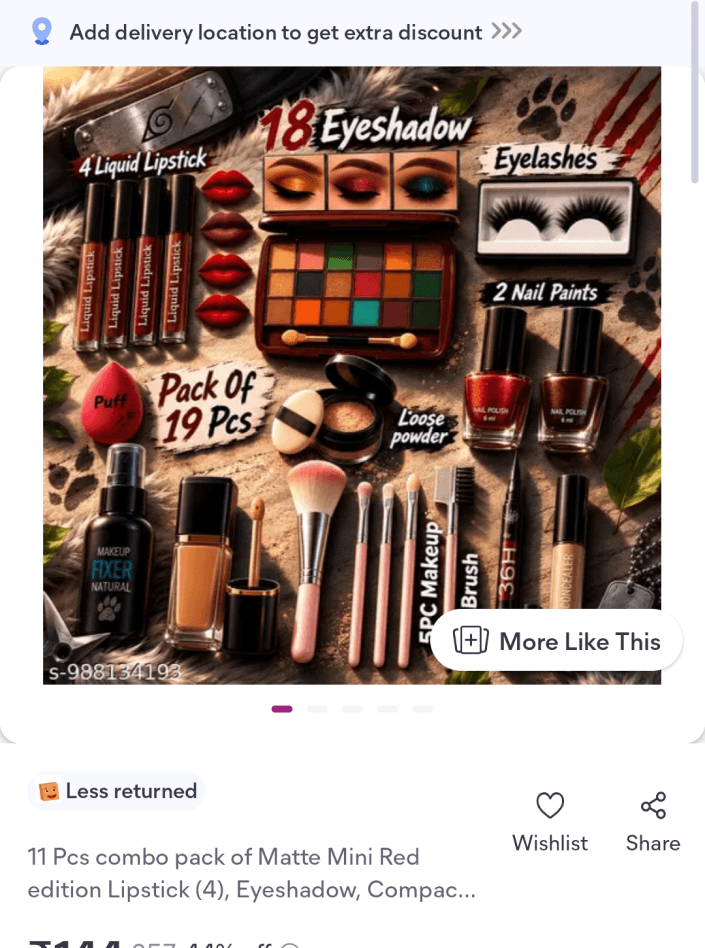
Then I found the thing that didn't fit. The same sellers were moving the same products, at the same price, over WhatsApp and moving them well. Same photos. Same product. One channel worked; the other didn't. So the photos weren't the whole problem. Something else was carrying the sale on WhatsApp and going missing on the marketplace.
On WhatsApp, the seller is the salesperson.
On a marketplace, the photo has to be.
On WhatsApp, the seller is the salesperson.
On a marketplace, the photo has to be.

How Business was ran
Flyr's seller is two or three people, often one family, running a business out of a single room in a tier 2–4 city. They add four or five new SKUs a month not many, which means each one has to earn its place. And they list the same stock across Meesho, Amazon and Myntra.
Those three aren't interchangeable. They're a ladder, and photography is what gates it. Meesho will take almost any image. Amazon has standards. Myntra has real requirements name them: model shots, background specs and a seller who can't produce that imagery doesn't get listed there at all, however good the product is.
So the cost of bad photography isn't only lost sales on the listings they have. It's being locked out of the channel where their margin would be best.
Insights from the User Research

Photography isn't how they compete on a marketplace. It's how they qualify for one.
Output could never be "a product photo". It had to be whatever each rung of the ladder demands which is where the four formats came from, including the branded status creative that no advertising tool builds.

There is no second photo. What they have is all they will ever have.
One photo in, permanently. Every idea that quietly depended on "take a better one" — guided capture, retry prompts, quality gates — came off the table in the same week.

They don't sell the product. They sell the certainty around it.
The image had to carry context, not just quality. An occasion, a person wearing it, a sense of where it belongs. "Make the photo sharper" stopped being a plausible answer.

They know exactly what they want. They just can't say it first.
The direction of the whole interaction. Asking them to describe wants the one thing they can't give; showing them something to react to asks for the thing they're best at. Choose an outcome, don't configure an input — and every decision in Act 2 is an application of that.
What I was solving for wasn't better Images.
It was getting a seller who can't describe what good looks like to a publishable creative across platforms.

What design had to survive
constrains the users brought
Digital Literacy of users
Sellers skim. Many read English slowly, some barely at all.
Design Vocabulary
"Lifestyle", "editorial" mean nothing. They can describe the image.
Need of customization
Giving control of image feels like they control output.
Units of Products
Four or five new SKUs a month, worked on in bursts between orders.
constrains the System brought
Systematic Prompt Setup
Making the prompt lineup such that the customization fall in line rather than destroying that intent of product image of the users.
Wrong image costs more
A creative showing detail the product doesn't have gets ordered, returned, and the seller eats the shipping and the rating.
Generation isn't instant
A server round trip of 8 seconds, on a budget Android over patchy 4G. A dropped connection mid-generation is normal, not an edge case.
Problems to Solve
One photo in, One photo out
Three decisions, not Thirty
Nothing to read
No vocabulary to learn
Faithful, not flattering photos
Right the first time
Works between platforms
Introduce trust elements
Ideal Flow

1
Upload

2
Select Style

3
Customization

4
Generate
Compititor Analysis
What they share is an assumption about who's holding the phone. Background removal, AI shadow, recolour, product staging, brand kits, instant resize, batch export.
That's the correct product for a Shopify seller in Austin with some visual literacy and an afternoon. It is the wrong product for a two-person shop in Meerut adding four SKUs a month between orders not because the tools are weak, but because every one of them asks a question our seller can't answer.
The Observation
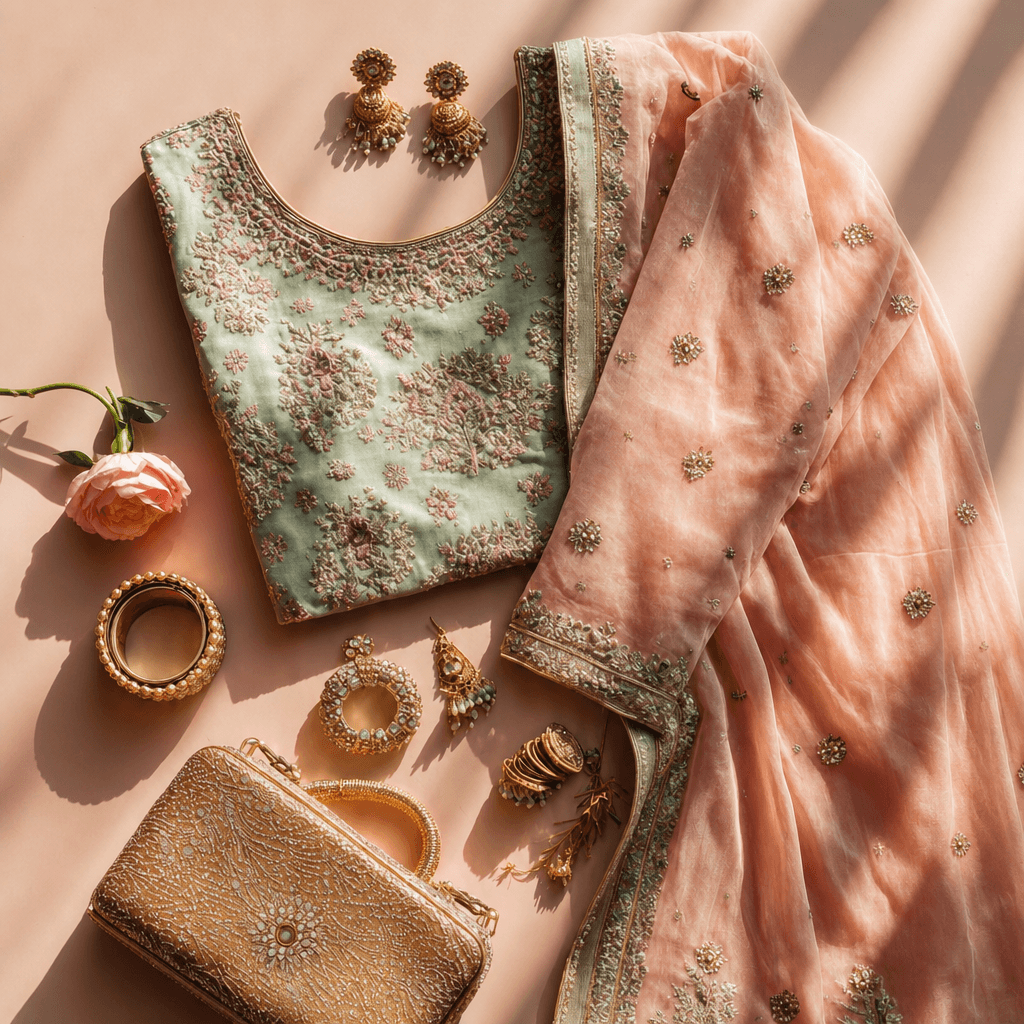
They hand you tools. We had to hand over taste.
PhotoRoom gives a seller background removal, AI shadows, recolour and product staging, then trusts them to compose something good. Our seller has no reference for what good looks like.

They put the product on a background. We put it on a person.
The editor tools stage a product in a scene. For apparel and jewellery in India the model is the sale a kurta on a hanger and the same kurta worn are not the same listing, and Myntra won't take the first one at all.

They format for storefronts. We format for status.
Instant Resize covers Instagram, Amazon and Shopify. It doesn't cover the channel these sellers actually own WhatsApp status, posted several times a day to people who've already bought once which is why Flyr sets the shop's branding into the image itself.
Decision 1 - What a Shoot Actually Produces
What they're selling — categories
We opened with two categories — clothing and jewellery because those were where the research said the gap between what a seller could shoot and what they needed was widest. Everything else came after: electronics, accessories, art and craft, kids, food. Add the order and rough dates. Category isn't a label on the output. It changes what the system does.
What Flyr makes — four formats

Image
Video

Catalogue

Branding
Decision 2 - What Level of Customization
Who Gets to Direct
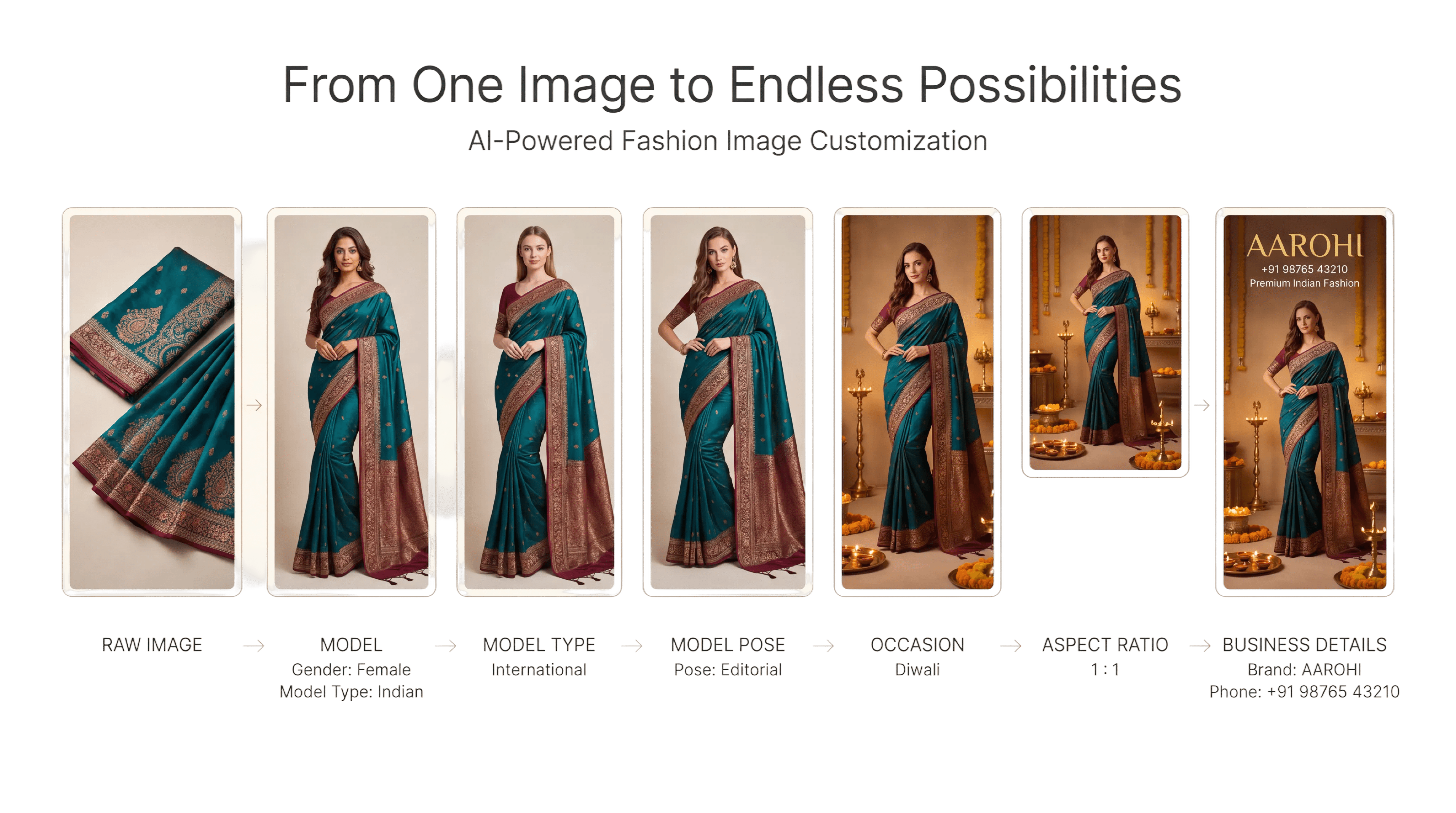
Generation models expose dozens of parameters. Lighting, lens, pose, colour grade, aspect ratio, camera angle. Every one is a decision the seller has no basis to make, and every one is a chance to produce something worse than the default.
The obvious move is to strip all of it out and fully automate. We tried. Sellers rejected it. It's their product and their customer, and handing over the entire decision felt like handing over the shop.
Control
Model gender
Model Type
Scene
Occasion
Pose
Aspect ratio
Business details
The Question it Asks
Who buys this?
Relatable or aspirational — and at what price?
Where is this used or worn?
When is it for?
Which angle sells this product?
Where am I posting this?
Whose shop is this?
Why the seller answers it better
They've watched who walks in and who reorders
A pricing decision
Their product, their customer's life
Their stock calendar already runs on it
They know which detail closes the sale
A distribution question, not a crop question.
Name, logo, number, feeds the branding format
Designs Iterations
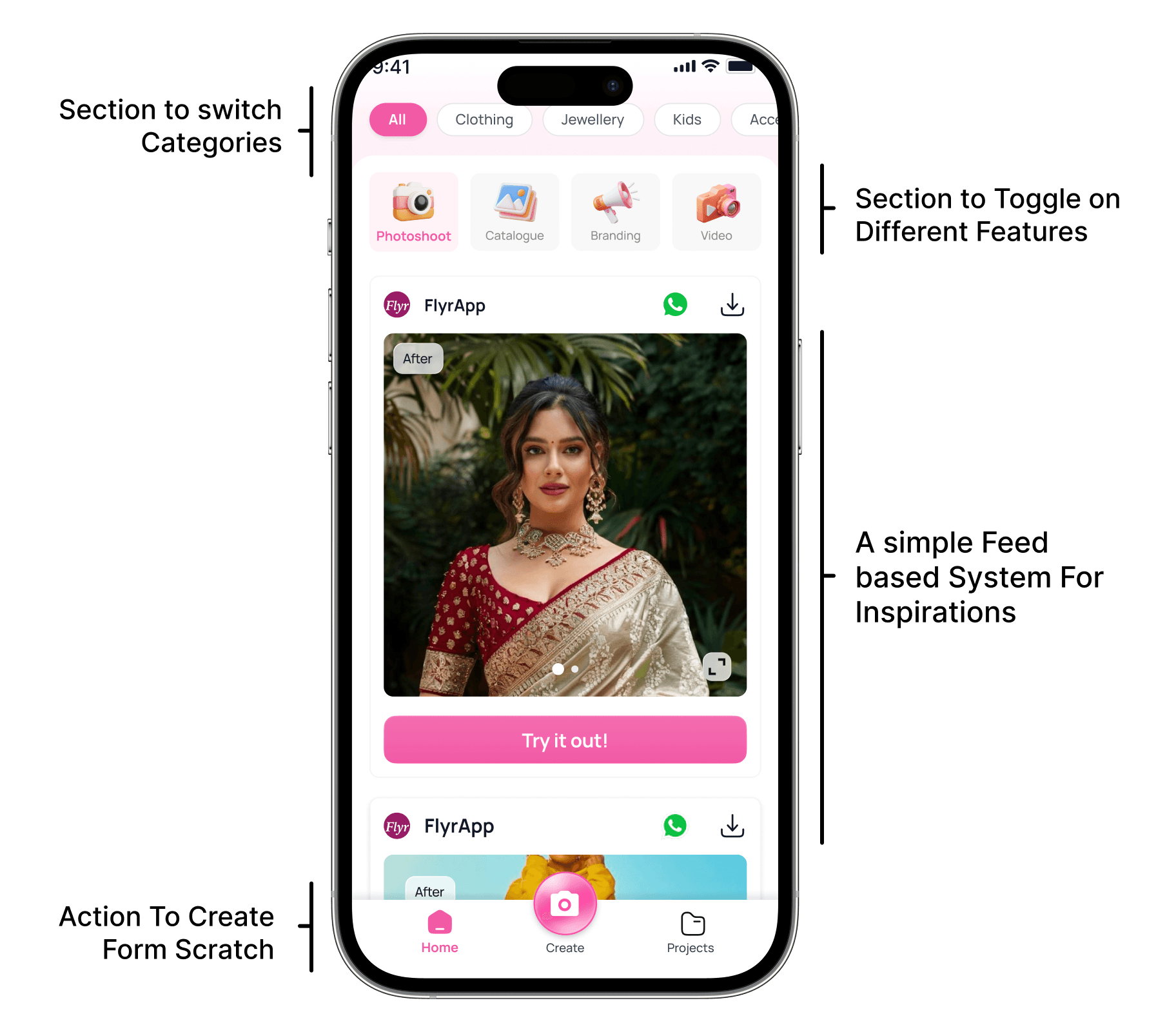
Home screen — three directions and a refinement
Present it as exactly that. Screens 1–3 are genuinely different organising principles; 4 is a refinement of 3. Calling a header removal a fourth concept is the kind of thing a reviewer notices, and labelling it honestly costs you nothing.
Organised by output type
Images-vs-videos is our taxonomy, not the seller's job and a "What's New" tile takes a primary slot.


Organised by past work
Empty on day one and it organises around retrieval when the seller came to make something.

Shipped
AI algorithms analyzes your personal data to create personal suggestions.
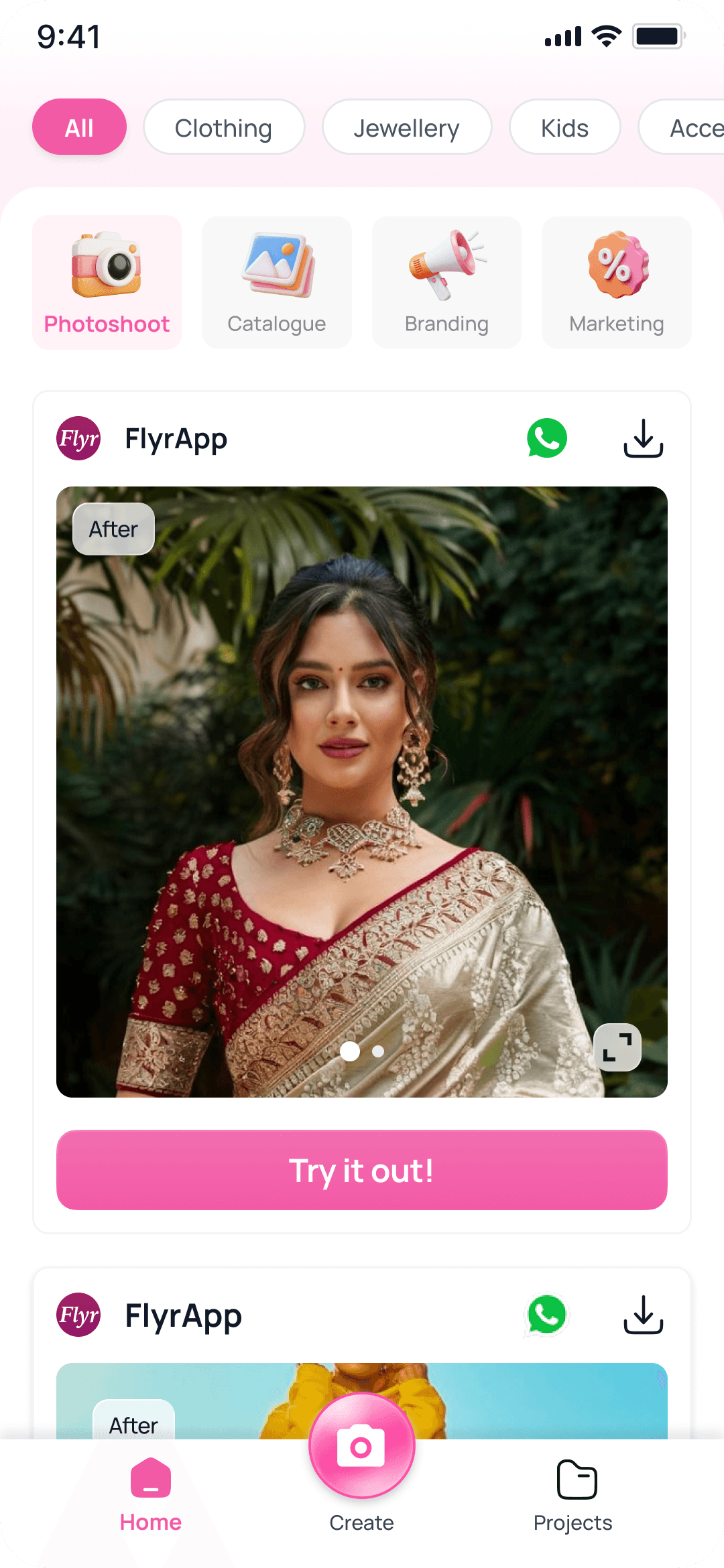
Organised by the job
A permanent welcome header spends the top of every visit on a first-run moment.

Organised by output type
Images-vs-videos is our taxonomy, not the seller's job and a "What's New" tile takes a primary slot.
Organised by past work
Empty on day one and it organises around retrieval when the seller came to make something.
Shipped
AI algorithms analyzes your personal data to create personal suggestions.
Organised by the job
A permanent welcome header spends the top of every visit on a first-run moment.
Organised by output type
Images-vs-videos is our taxonomy, not the seller's job and a "What's New" tile takes a primary slot.
Organised by past work
Empty on day one and it organises around retrieval when the seller came to make something.
Shipped
AI algorithms analyzes your personal data to create personal suggestions.
Organised by the job
A permanent welcome header spends the top of every visit on a first-run moment.
Organised by output type
Images-vs-videos is our taxonomy, not the seller's job and a "What's New" tile takes a primary slot.
Organised by past work
Empty on day one and it organises around retrieval when the seller came to make something.
Shipped
AI algorithms analyzes your personal data to create personal suggestions.
Organised by the job
A permanent welcome header spends the top of every visit on a first-run moment.
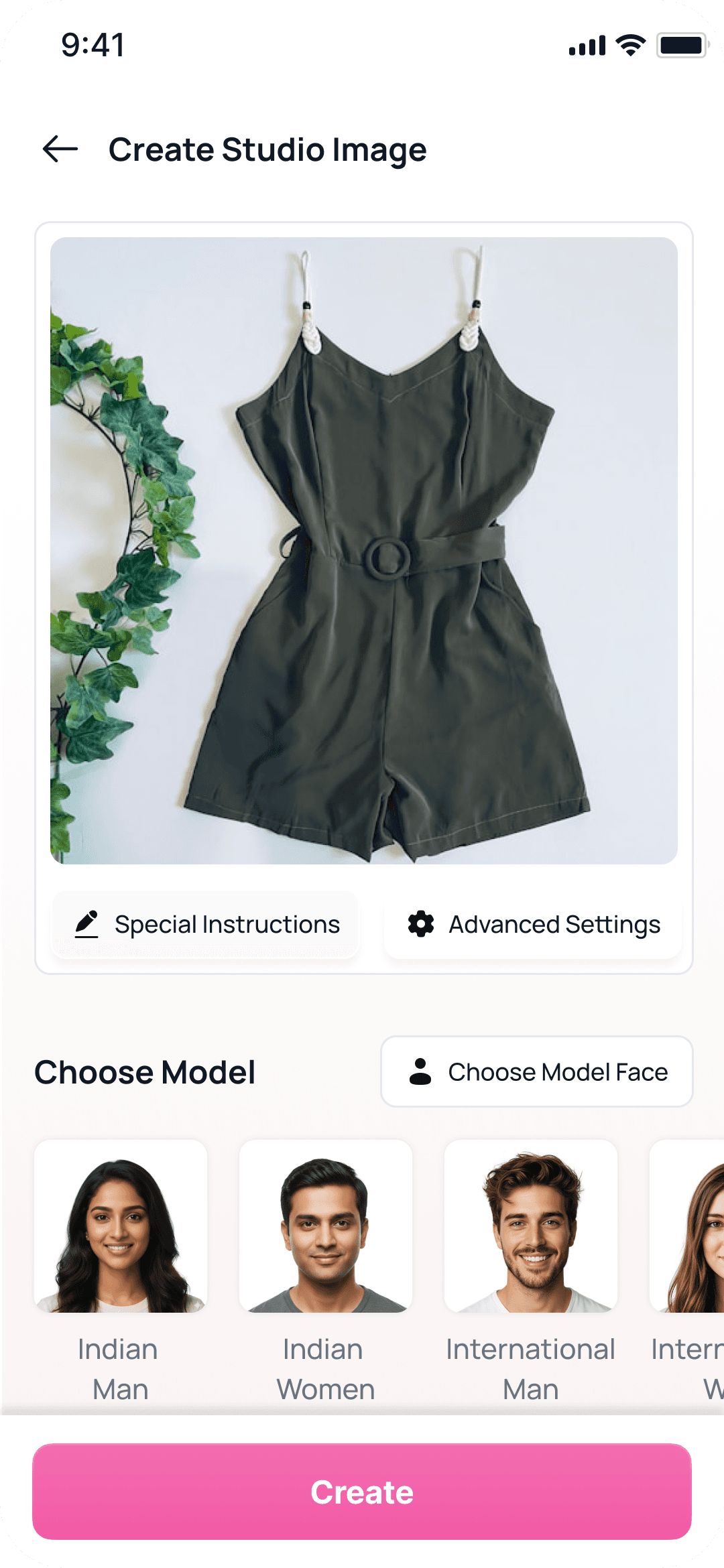
Creation screen — same treatment
Present it as exactly that. Screens 1–3 are genuinely different organising principles; 4 is a refinement of 3. Calling a header removal a fourth concept is the kind of thing a reviewer notices, and labelling it honestly costs you nothing.
Everything on the surface
A permanent welcome header spends the top of every visit on a first-run moment.

Explained in words
A paragraph of pre-written instructions asks the seller to read and judge prose, and puts the craft.

Product first, control collapsed
Both advanced paths are behind buttons, so a seller who wants more control has to go looking for it.
Everything on the surface
A permanent welcome header spends the top of every visit on a first-run moment.
Explained in words
A paragraph of pre-written instructions asks the seller to read and judge prose, and puts the craft.
Product first, control collapsed
Both advanced paths are behind buttons, so a seller who wants more control has to go looking for it.
Everything on the surface
A permanent welcome header spends the top of every visit on a first-run moment.
Explained in words
A paragraph of pre-written instructions asks the seller to read and judge prose, and puts the craft.
Product first, control collapsed
Both advanced paths are behind buttons, so a seller who wants more control has to go looking for it.
Everything on the surface
A permanent welcome header spends the top of every visit on a first-run moment.
Explained in words
A paragraph of pre-written instructions asks the seller to read and judge prose, and puts the craft.
Product first, control collapsed
Both advanced paths are behind buttons, so a seller who wants more control has to go looking for it.

image Generation Flow
Photoshoot
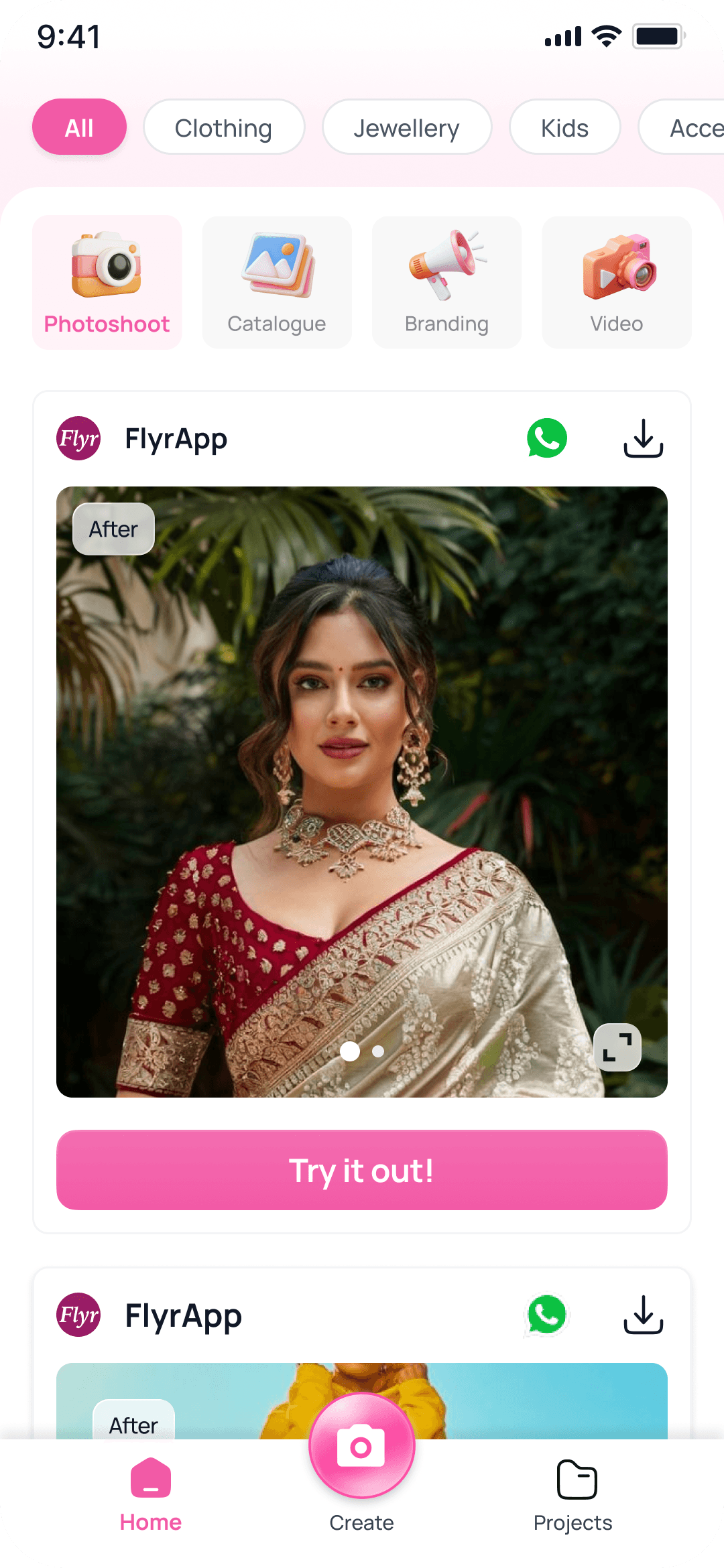
catalogue

Video

Branding

Creation page
Choose Model

Advanced Settings

Branding Details

Special instructions

Catalogue poses

Projects

Photoshoot
catalogue
Video
Branding
Creation page
Choose Model
Advanced Settings
Branding Details
Special instructions
Catalogue poses
Projects
Photoshoot
catalogue
Video
Branding
Creation page
Choose Model
Advanced Settings
Branding Details
Special instructions
Catalogue poses
Projects
Photoshoot
catalogue
Video
Branding
Creation page
Choose Model
Advanced Settings
Branding Details
Special instructions
Catalogue poses
Projects
Where I was wrong about the market
I was confident clothing would be the entry point and the revenue driver. It's the biggest category, the most visual, and the one where bad photography costs the most.
Research disagreed. Jewellery came back just as strong, for a reason I hadn't considered: a jewellery seller's product is small, reflective, and almost impossible to shoot well on a phone, so the gap between what they could produce and what they needed was wider than in apparel.
%
Cloting Category
%
Jwellary
%
Rest
Impact
Phase 1 · Dec 2025 – Jan 2026 · Photoshoot + Branding
K +per day
Images Generated
%
Retention till M3
%
LTP
Phase 2 · Feb – Jun 2026 · Catalogue added
K +per day
Images Generated
%
Retention till M3
%
LTP
Phase 3 · Jul 2026 – present · Video added
K +per day
Images Generated
%
Retention till M3
%
LTP
What this taught me
I thought the problem was photo quality. It was the seller's absence I was fixing the symptom rather than the problem.
I thought removing their decisions would help. They rejected full automation, less effort is not less control.
I thought the design work lived in the interface. It lived in a layer nobody sees I stopped counting my work in screens.
I thought video would be the unlock. Catalogue was, 22 points to 8 the unit of work beats the exciting feature.
MRR
3 Cr.+
Paying Users
16K
M3 Retention
58%
What is the Product
EasyBill turns a shopkeeper's phone into his billing counter. He photographs his shelves once to build a catalogue, then bills like he's ordering on Zepto tap rice, four kilos, add, done. The customer scans a QR and the bill lands on their WhatsApp. No printer, no paper, no POS machine.
From any random click to e- Commerce Ready Images
What a POS is actually for
A restaurant has a POS. It takes the order, prints a slip, and hands it over. The obvious product is to do that on a phone and save the shopkeeper the hardware.
But most of the shops we were looking at don't have a POS and never did. A kirana owner adds it up in his head, tells you the number, and writes it in a notebook if he writes it anywhere. The machine was never the thing he was missing.
What he's missing is everything the machine would have been quietly doing underneath: what sold, what's left, what he ordered last month, who bought it.
Choosing the buyer before we chose the problem
Casual consumer, tier 3–4
Has Need of AI Generated Images
Will not Pay for it
No revenue attached to the output, free alternatives everywhere, images are a novelty, not an quirk.
Small business, 3–4 people
Has Need of AI Generated Images
Will Pay for it
Output feeds directly into sales, already spends on photography, has expendable income
Key Questions that needed Answers
Q1: How does a shop without a POS actually bill someone today?
Q2: What does the owner know about his own stock, and how?
Q3: What happens at the counter when there's a queue?
Q4: Would anyone type in four hundred products?
All four needed the same thing: going and looking. So that's where I started — with the listings, and then with the people behind them.
The Research
32 shops across 5 categories — kirana, restaurant, workshop, electrical, others in Bangalore and Jamshedpur. observation based interview sat at the counter during trading hours to see the transaction happening live and interviewed after close.
The most useful hours were the busy ones. Nothing about how a shop bills is visible in a quiet interview it's visible when three people are waiting and the owner is doing four things at once.
Platform Problem
Then I found the thing that didn't fit. The same sellers were moving the same products, at the same price, over WhatsApp and moving them well. Same photos. Same product. One channel worked; the other didn't. So the photos weren't the whole problem. Something else was carrying the sale on WhatsApp and going missing on the marketplace.
On WhatsApp, the seller is the salesperson.
On a marketplace, the photo has to be.
On WhatsApp, the seller is the salesperson.
On a marketplace, the photo has to be.
How Business was ran
Flyr's seller is two or three people, often one family, running a business out of a single room in a tier 2–4 city. They add four or five new SKUs a month not many, which means each one has to earn its place. And they list the same stock across Meesho, Amazon and Myntra.
Those three aren't interchangeable. They're a ladder, and photography is what gates it. Meesho will take almost any image. Amazon has standards. Myntra has real requirements name them: model shots, background specs and a seller who can't produce that imagery doesn't get listed there at all, however good the product is.
So the cost of bad photography isn't only lost sales on the listings they have. It's being locked out of the channel where their margin would be best.
Insights from the User Research
Photography isn't how they compete on a marketplace. It's how they qualify for one.
Output could never be "a product photo". It had to be whatever each rung of the ladder demands which is where the four formats came from, including the branded status creative that no advertising tool builds.
There is no second photo. What they have is all they will ever have.
One photo in, permanently. Every idea that quietly depended on "take a better one" — guided capture, retry prompts, quality gates — came off the table in the same week.
They don't sell the product. They sell the certainty around it.
The image had to carry context, not just quality. An occasion, a person wearing it, a sense of where it belongs. "Make the photo sharper" stopped being a plausible answer.
They know exactly what they want. They just can't say it first.
The direction of the whole interaction. Asking them to describe wants the one thing they can't give; showing them something to react to asks for the thing they're best at. Choose an outcome, don't configure an input — and every decision in Act 2 is an application of that.
What I was solving for wasn't better Images.
It was getting a seller who can't describe what good looks like to a publishable creative across platforms.
What design had to survive
constrains the users brought
Digital Literacy of users
Sellers skim. Many read English slowly, some barely at all.
Design Vocabulary
"Lifestyle", "editorial" mean nothing. They can describe the image.
Need of customization
Giving control of image feels like they control output.
Units of Products
Four or five new SKUs a month, worked on in bursts between orders.
constrains the System brought
Systematic Prompt Setup
Making the prompt lineup such that the customization fall in line rather than destroying that intent of product image of the users.
Wrong image costs more
A creative showing detail the product doesn't have gets ordered, returned, and the seller eats the shipping and the rating.
Generation isn't instant
A server round trip of 8 seconds, on a budget Android over patchy 4G. A dropped connection mid-generation is normal, not an edge case.
Problems to Solve
One photo in, One photo out
Three decisions, not Thirty
Nothing to read
No vocabulary to learn
Faithful, not flattering photos
Right the first time
Works between platforms
Introduce trust elements
Ideal Flow
1
Upload
2
Select Style
3
Customization
4
Generate
Compititor Analysis
What they share is an assumption about who's holding the phone. Background removal, AI shadow, recolour, product staging, brand kits, instant resize, batch export.
That's the correct product for a Shopify seller in Austin with some visual literacy and an afternoon. It is the wrong product for a two-person shop in Meerut adding four SKUs a month between orders not because the tools are weak, but because every one of them asks a question our seller can't answer.
The Observation
They hand you tools. We had to hand over taste.
PhotoRoom gives a seller background removal, AI shadows, recolour and product staging, then trusts them to compose something good. Our seller has no reference for what good looks like.
They put the product on a background. We put it on a person.
The editor tools stage a product in a scene. For apparel and jewellery in India the model is the sale a kurta on a hanger and the same kurta worn are not the same listing, and Myntra won't take the first one at all.
They format for storefronts. We format for status.
Instant Resize covers Instagram, Amazon and Shopify. It doesn't cover the channel these sellers actually own WhatsApp status, posted several times a day to people who've already bought once which is why Flyr sets the shop's branding into the image itself.
Decision 1 - What a Shoot Actually Produces
What they're selling — categories
We opened with two categories — clothing and jewellery because those were where the research said the gap between what a seller could shoot and what they needed was widest. Everything else came after: electronics, accessories, art and craft, kids, food. Add the order and rough dates. Category isn't a label on the output. It changes what the system does.
What Flyr makes — four formats
Image
Video
Catalogue
Branding
Decision 2 - What Level of Customization
Who Gets to Direct
Generation models expose dozens of parameters. Lighting, lens, pose, colour grade, aspect ratio, camera angle. Every one is a decision the seller has no basis to make, and every one is a chance to produce something worse than the default.
The obvious move is to strip all of it out and fully automate. We tried. Sellers rejected it. It's their product and their customer, and handing over the entire decision felt like handing over the shop.
Control
Model gender
Model Type
Scene
Occasion
Pose
Aspect ratio
Business details
The Question it Asks
Who buys this?
Relatable or aspirational — and at what price?
Where is this used or worn?
When is it for?
Which angle sells this product?
Where am I posting this?
Whose shop is this?
Why the seller answers it better
They've watched who walks in and who reorders
A pricing decision
Their product, their customer's life
Their stock calendar already runs on it
They know which detail closes the sale
A distribution question, not a crop question.
Name, logo, number, feeds the branding format
Designs Iterations
Home screen — three directions and a refinement
Present it as exactly that. Screens 1–3 are genuinely different organising principles; 4 is a refinement of 3. Calling a header removal a fourth concept is the kind of thing a reviewer notices, and labelling it honestly costs you nothing.
Organised by output type
Images-vs-videos is our taxonomy, not the seller's job and a "What's New" tile takes a primary slot.
Organised by past work
Empty on day one and it organises around retrieval when the seller came to make something.
Shipped
AI algorithms analyzes your personal data to create personal suggestions.
Organised by the job
A permanent welcome header spends the top of every visit on a first-run moment.
Organised by output type
Images-vs-videos is our taxonomy, not the seller's job and a "What's New" tile takes a primary slot.
Organised by past work
Empty on day one and it organises around retrieval when the seller came to make something.
Shipped
AI algorithms analyzes your personal data to create personal suggestions.
Organised by the job
A permanent welcome header spends the top of every visit on a first-run moment.
Organised by output type
Images-vs-videos is our taxonomy, not the seller's job and a "What's New" tile takes a primary slot.
Organised by past work
Empty on day one and it organises around retrieval when the seller came to make something.
Shipped
AI algorithms analyzes your personal data to create personal suggestions.
Organised by the job
A permanent welcome header spends the top of every visit on a first-run moment.
Organised by output type
Images-vs-videos is our taxonomy, not the seller's job and a "What's New" tile takes a primary slot.
Organised by past work
Empty on day one and it organises around retrieval when the seller came to make something.
Shipped
AI algorithms analyzes your personal data to create personal suggestions.
Organised by the job
A permanent welcome header spends the top of every visit on a first-run moment.
Creation screen — same treatment
Present it as exactly that. Screens 1–3 are genuinely different organising principles; 4 is a refinement of 3. Calling a header removal a fourth concept is the kind of thing a reviewer notices, and labelling it honestly costs you nothing.
Everything on the surface
A permanent welcome header spends the top of every visit on a first-run moment.
Explained in words
A paragraph of pre-written instructions asks the seller to read and judge prose, and puts the craft.
Product first, control collapsed
Both advanced paths are behind buttons, so a seller who wants more control has to go looking for it.
Everything on the surface
A permanent welcome header spends the top of every visit on a first-run moment.
Explained in words
A paragraph of pre-written instructions asks the seller to read and judge prose, and puts the craft.
Product first, control collapsed
Both advanced paths are behind buttons, so a seller who wants more control has to go looking for it.
Everything on the surface
A permanent welcome header spends the top of every visit on a first-run moment.
Explained in words
A paragraph of pre-written instructions asks the seller to read and judge prose, and puts the craft.
Product first, control collapsed
Both advanced paths are behind buttons, so a seller who wants more control has to go looking for it.
Everything on the surface
A permanent welcome header spends the top of every visit on a first-run moment.
Explained in words
A paragraph of pre-written instructions asks the seller to read and judge prose, and puts the craft.
Product first, control collapsed
Both advanced paths are behind buttons, so a seller who wants more control has to go looking for it.
image Generation Flow
Photoshoot
catalogue
Video
Branding
Creation page
Choose Model
Advanced Settings
Branding Details
Special instructions
Catalogue poses
Projects
Photoshoot
catalogue
Video
Branding
Creation page
Choose Model
Advanced Settings
Branding Details
Special instructions
Catalogue poses
Projects
Photoshoot
catalogue
Video
Branding
Creation page
Choose Model
Advanced Settings
Branding Details
Special instructions
Catalogue poses
Projects
Photoshoot
catalogue
Video
Branding
Creation page
Choose Model
Advanced Settings
Branding Details
Special instructions
Catalogue poses
Projects
Where I was wrong about the market
I was confident clothing would be the entry point and the revenue driver. It's the biggest category, the most visual, and the one where bad photography costs the most.
Research disagreed. Jewellery came back just as strong, for a reason I hadn't considered: a jewellery seller's product is small, reflective, and almost impossible to shoot well on a phone, so the gap between what they could produce and what they needed was wider than in apparel.
%
Cloting Category
%
Jwellary
%
Rest
Impact
Phase 1 · Dec 2025 – Jan 2026 · Photoshoot + Branding
K +per day
Images Generated
%
Retention till M3
%
LTP
Phase 2 · Feb – Jun 2026 · Catalogue added
K +per day
Images Generated
%
Retention till M3
%
LTP
Phase 3 · Jul 2026 – present · Video added
K +per day
Images Generated
%
Retention till M3
%
LTP
What this taught me
I thought the problem was photo quality. It was the seller's absence I was fixing the symptom rather than the problem.
I thought removing their decisions would help. They rejected full automation, less effort is not less control.
I thought the design work lived in the interface. It lived in a layer nobody sees I stopped counting my work in screens.
I thought video would be the unlock. Catalogue was, 22 points to 8 the unit of work beats the exciting feature.
MRR
3 Cr.+
Paying Users
16K
M3 Retention
58%
What is the Product
EasyBill turns a shopkeeper's phone into his billing counter. He photographs his shelves once to build a catalogue, then bills like he's ordering on Zepto tap rice, four kilos, add, done. The customer scans a QR and the bill lands on their WhatsApp. No printer, no paper, no POS machine.
From any random click to e- Commerce Ready Images
What a POS is actually for
A restaurant has a POS. It takes the order, prints a slip, and hands it over. The obvious product is to do that on a phone and save the shopkeeper the hardware.
But most of the shops we were looking at don't have a POS and never did. A kirana owner adds it up in his head, tells you the number, and writes it in a notebook if he writes it anywhere. The machine was never the thing he was missing.
What he's missing is everything the machine would have been quietly doing underneath: what sold, what's left, what he ordered last month, who bought it.
Choosing the buyer before we chose the problem
Casual consumer, tier 3–4
Has Need of AI Generated Images
Will not Pay for it
No revenue attached to the output, free alternatives everywhere, images are a novelty, not an quirk.
Small business, 3–4 people
Has Need of AI Generated Images
Will Pay for it
Output feeds directly into sales, already spends on photography, has expendable income
Key Questions that needed Answers
Q1: How does a shop without a POS actually bill someone today?
Q2: What does the owner know about his own stock, and how?
Q3: What happens at the counter when there's a queue?
Q4: Would anyone type in four hundred products?
All four needed the same thing: going and looking. So that's where I started — with the listings, and then with the people behind them.
The Research
32 shops across 5 categories — kirana, restaurant, workshop, electrical, others in Bangalore and Jamshedpur. observation based interview sat at the counter during trading hours to see the transaction happening live and interviewed after close.
The most useful hours were the busy ones. Nothing about how a shop bills is visible in a quiet interview it's visible when three people are waiting and the owner is doing four things at once.
Platform Problem
Then I found the thing that didn't fit. The same sellers were moving the same products, at the same price, over WhatsApp and moving them well. Same photos. Same product. One channel worked; the other didn't. So the photos weren't the whole problem. Something else was carrying the sale on WhatsApp and going missing on the marketplace.
On WhatsApp, the seller is the salesperson.
On a marketplace, the photo has to be.
On WhatsApp, the seller is the salesperson.
On a marketplace, the photo has to be.
How Business was ran
Flyr's seller is two or three people, often one family, running a business out of a single room in a tier 2–4 city. They add four or five new SKUs a month not many, which means each one has to earn its place. And they list the same stock across Meesho, Amazon and Myntra.
Those three aren't interchangeable. They're a ladder, and photography is what gates it. Meesho will take almost any image. Amazon has standards. Myntra has real requirements name them: model shots, background specs and a seller who can't produce that imagery doesn't get listed there at all, however good the product is.
So the cost of bad photography isn't only lost sales on the listings they have. It's being locked out of the channel where their margin would be best.
Insights from the User Research
Photography isn't how they compete on a marketplace. It's how they qualify for one.
Output could never be "a product photo". It had to be whatever each rung of the ladder demands which is where the four formats came from, including the branded status creative that no advertising tool builds.
There is no second photo. What they have is all they will ever have.
One photo in, permanently. Every idea that quietly depended on "take a better one" — guided capture, retry prompts, quality gates — came off the table in the same week.
They don't sell the product. They sell the certainty around it.
The image had to carry context, not just quality. An occasion, a person wearing it, a sense of where it belongs. "Make the photo sharper" stopped being a plausible answer.
They know exactly what they want. They just can't say it first.
The direction of the whole interaction. Asking them to describe wants the one thing they can't give; showing them something to react to asks for the thing they're best at. Choose an outcome, don't configure an input — and every decision in Act 2 is an application of that.
What I was solving for wasn't better Images.
It was getting a seller who can't describe what good looks like to a publishable creative across platforms.
What design had to survive
constrains the users brought
Digital Literacy of users
Sellers skim. Many read English slowly, some barely at all.
Design Vocabulary
"Lifestyle", "editorial" mean nothing. They can describe the image.
Need of customization
Giving control of image feels like they control output.
Units of Products
Four or five new SKUs a month, worked on in bursts between orders.
constrains the System brought
Systematic Prompt Setup
Making the prompt lineup such that the customization fall in line rather than destroying that intent of product image of the users.
Wrong image costs more
A creative showing detail the product doesn't have gets ordered, returned, and the seller eats the shipping and the rating.
Generation isn't instant
A server round trip of 8 seconds, on a budget Android over patchy 4G. A dropped connection mid-generation is normal, not an edge case.
Problems to Solve
One photo in, One photo out
Three decisions, not Thirty
Nothing to read
No vocabulary to learn
Faithful, not flattering photos
Right the first time
Works between platforms
Introduce trust elements
Ideal Flow
1
Upload
2
Select Style
3
Customization
4
Generate
Compititor Analysis
What they share is an assumption about who's holding the phone. Background removal, AI shadow, recolour, product staging, brand kits, instant resize, batch export.
That's the correct product for a Shopify seller in Austin with some visual literacy and an afternoon. It is the wrong product for a two-person shop in Meerut adding four SKUs a month between orders not because the tools are weak, but because every one of them asks a question our seller can't answer.
The Observation
They hand you tools. We had to hand over taste.
PhotoRoom gives a seller background removal, AI shadows, recolour and product staging, then trusts them to compose something good. Our seller has no reference for what good looks like.
They put the product on a background. We put it on a person.
The editor tools stage a product in a scene. For apparel and jewellery in India the model is the sale a kurta on a hanger and the same kurta worn are not the same listing, and Myntra won't take the first one at all.
They format for storefronts. We format for status.
Instant Resize covers Instagram, Amazon and Shopify. It doesn't cover the channel these sellers actually own WhatsApp status, posted several times a day to people who've already bought once which is why Flyr sets the shop's branding into the image itself.
Decision 1 - What a Shoot Actually Produces
The Observation
We opened with two categories — clothing and jewellery because those were where the research said the gap between what a seller could shoot and what they needed was widest. Everything else came after: electronics, accessories, art and craft, kids, food. Add the order and rough dates. Category isn't a label on the output. It changes what the system does.
The Observation
Image
Video
Catalogue
Branding
Decision 2 - What Level of Customization
The Observation
Generation models expose dozens of parameters. Lighting, lens, pose, colour grade, aspect ratio, camera angle. Every one is a decision the seller has no basis to make, and every one is a chance to produce something worse than the default.
The obvious move is to strip all of it out and fully automate. We tried. Sellers rejected it. It's their product and their customer, and handing over the entire decision felt like handing over the shop.
Control
Model gender
Model Type
Scene
Occasion
Pose
Aspect ratio
Business details
The Question it Asks
Who buys this?
Relatable or aspirational — and at what price?
Where is this used or worn?
When is it for?
Which angle sells this product?
Where am I posting this?
Whose shop is this?
Why the seller answers it better
They've watched who walks in and who reorders
A pricing decision
Their product, their customer's life
Their stock calendar already runs on it
They know which detail closes the sale
A distribution question, not a crop question.
Name, logo, number, feeds the branding format
Designs Iterations
Home screen — three directions and a refinement
Present it as exactly that. Screens 1–3 are genuinely different organising principles; 4 is a refinement of 3. Calling a header removal a fourth concept is the kind of thing a reviewer notices, and labelling it honestly costs you nothing.
Organised by output type
Images-vs-videos is our taxonomy, not the seller's job and a "What's New" tile takes a primary slot.
Organised by past work
Empty on day one and it organises around retrieval when the seller came to make something.
Shipped
AI algorithms analyzes your personal data to create personal suggestions.
Organised by the job
A permanent welcome header spends the top of every visit on a first-run moment.
Organised by output type
Images-vs-videos is our taxonomy, not the seller's job and a "What's New" tile takes a primary slot.
Organised by past work
Empty on day one and it organises around retrieval when the seller came to make something.
Shipped
AI algorithms analyzes your personal data to create personal suggestions.
Organised by the job
A permanent welcome header spends the top of every visit on a first-run moment.
Organised by output type
Images-vs-videos is our taxonomy, not the seller's job and a "What's New" tile takes a primary slot.
Organised by past work
Empty on day one and it organises around retrieval when the seller came to make something.
Shipped
AI algorithms analyzes your personal data to create personal suggestions.
Organised by the job
A permanent welcome header spends the top of every visit on a first-run moment.
Organised by output type
Images-vs-videos is our taxonomy, not the seller's job and a "What's New" tile takes a primary slot.
Organised by past work
Empty on day one and it organises around retrieval when the seller came to make something.
Shipped
AI algorithms analyzes your personal data to create personal suggestions.
Organised by the job
A permanent welcome header spends the top of every visit on a first-run moment.
Creation screen — same treatment
Present it as exactly that. Screens 1–3 are genuinely different organising principles; 4 is a refinement of 3. Calling a header removal a fourth concept is the kind of thing a reviewer notices, and labelling it honestly costs you nothing.
Everything on the surface
A permanent welcome header spends the top of every visit on a first-run moment.
Explained in words
A paragraph of pre-written instructions asks the seller to read and judge prose, and puts the craft.
Product first, control collapsed
Both advanced paths are behind buttons, so a seller who wants more control has to go looking for it.
Everything on the surface
A permanent welcome header spends the top of every visit on a first-run moment.
Explained in words
A paragraph of pre-written instructions asks the seller to read and judge prose, and puts the craft.
Product first, control collapsed
Both advanced paths are behind buttons, so a seller who wants more control has to go looking for it.
Everything on the surface
A permanent welcome header spends the top of every visit on a first-run moment.
Explained in words
A paragraph of pre-written instructions asks the seller to read and judge prose, and puts the craft.
Product first, control collapsed
Both advanced paths are behind buttons, so a seller who wants more control has to go looking for it.
Everything on the surface
A permanent welcome header spends the top of every visit on a first-run moment.
Explained in words
A paragraph of pre-written instructions asks the seller to read and judge prose, and puts the craft.
Product first, control collapsed
Both advanced paths are behind buttons, so a seller who wants more control has to go looking for it.
image Generation Flow
Photoshoot
catalogue
Video
Branding
Creation page
Choose Model
Advanced Settings
Branding Details
Special instructions
Catalogue poses
Projects
Photoshoot
catalogue
Video
Branding
Creation page
Choose Model
Advanced Settings
Branding Details
Special instructions
Catalogue poses
Projects
Photoshoot
catalogue
Video
Branding
Creation page
Choose Model
Advanced Settings
Branding Details
Special instructions
Catalogue poses
Projects
Photoshoot
catalogue
Video
Branding
Creation page
Choose Model
Advanced Settings
Branding Details
Special instructions
Catalogue poses
Projects
Where I was wrong about the market
I was confident clothing would be the entry point and the revenue driver. It's the biggest category, the most visual, and the one where bad photography costs the most.
Research disagreed. Jewellery came back just as strong, for a reason I hadn't considered: a jewellery seller's product is small, reflective, and almost impossible to shoot well on a phone, so the gap between what they could produce and what they needed was wider than in apparel.
%
Cloting Category
%
Jwellary
%
Rest
Impact
Phase 1 · Dec 2025 – Jan 2026 · Photoshoot + Branding
K +per day
Images Generated
%
Retention till M3
%
LTP
Phase 2 · Feb – Jun 2026 · Catalogue added
K +per day
Images Generated
%
Retention till M3
%
LTP
Phase 3 · Jul 2026 – present · Video added
K +per day
Images Generated
%
Retention till M3
%
LTP