Project Done at AI Verticle of PagarBook


What is the Product
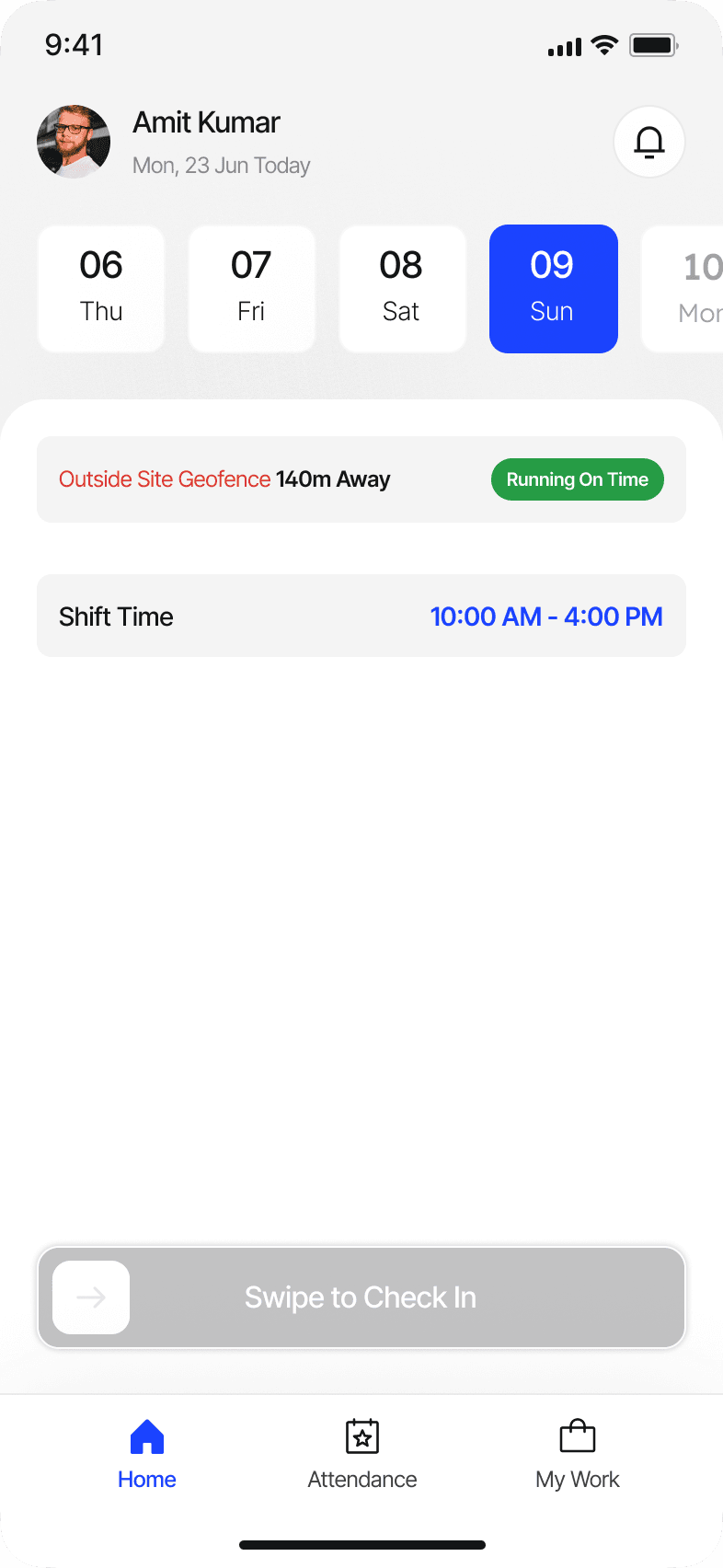
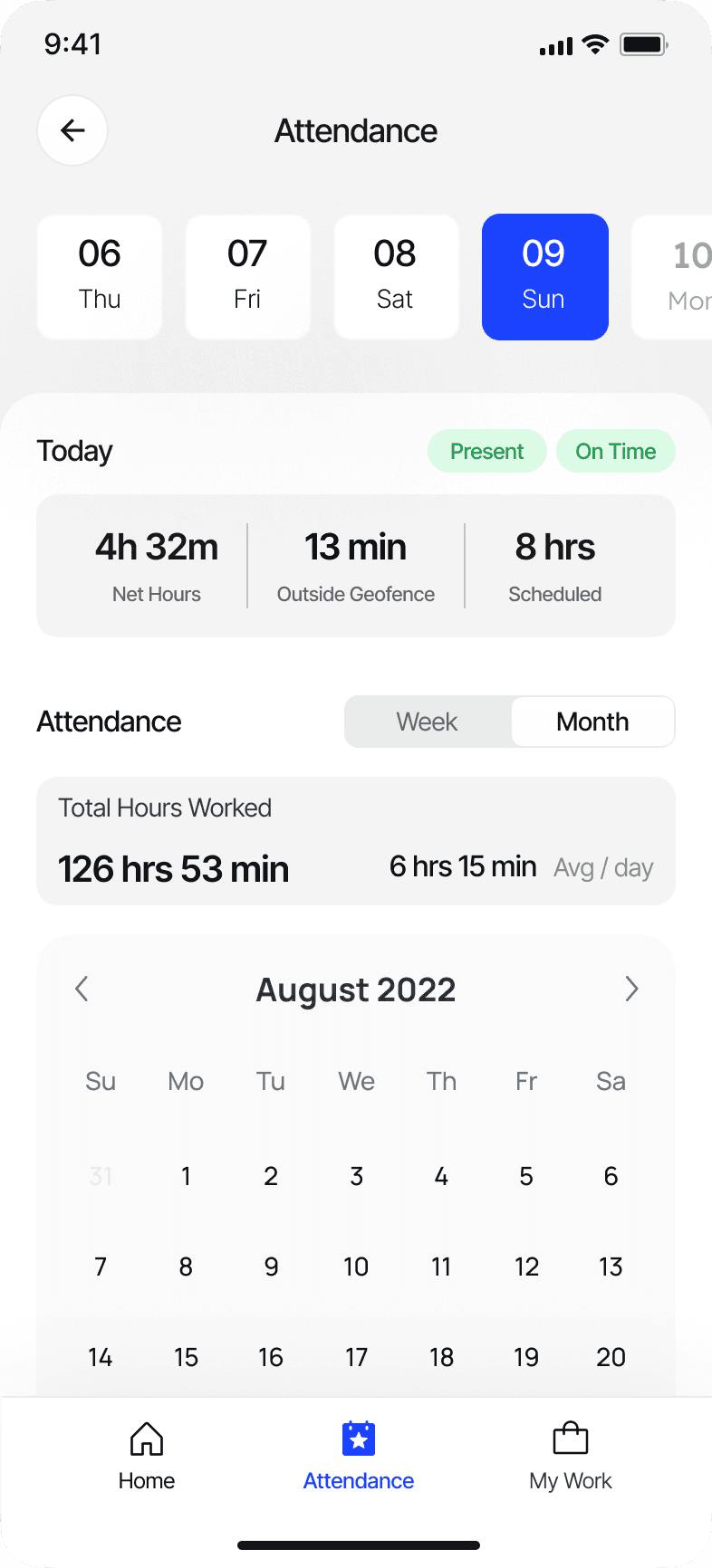
StaffLive is an attendance and location app for businesses with ten to twelve employees, not twelve hundred. The worker swipes once when he arrives. If he leaves the workplace, the owner knows immediately. At the end of the month, hours and days come out as a report instead of an argument.
How is it Different
A company with four hundred employees has an attendance system because it has to payroll runs on it, compliance depends on it, and no manager can hold four hundred people in their head.
A business with twelve employees has none of that. The owner is standing there. He can see who came. The entire problem appears to be solved by having eyes.
It isn't, and the reason has nothing to do with attendance. It has to do with what happens twenty-nine days later, when he sits down to work out what each of them is owed and discovers that his memory and their memory are different documents.

Key Questions that needed Answers
Q1: How does a business this size record attendance today?
Q2: What does the owner actually want to know where they are, or when they've left?
Q3: Where does the absence of a record actually hurt?
Q4: Why would a worker open an app that watches him?
Q5: Who decides what counts as late?
All four needed the same thing: going and looking. So that's where I started — with the listings, and then with the people behind them.
The Research
8 businesses across 4 categories automobile and fabrication workshops, small restaurants, in Bangalore. 8 owners and, separately, 12-15 workers Two things shaped what we found. We went at shift-change rather than in the quiet hours, and we asked owners about the 1st of the month rather than about attendance.
Lets Run The sceanario

08:55 -The first man opens the shutter.
He is early most days. He has been early for nine years. It has never once been written down anywhere, and it has never once been worth anything to him.
No Record
Worker loses

09:15 -Two more arrive. One is late.
The owner sees him come in, looks at him, and says nothing. He intends to remember. He is also opening the shop, taking a call and looking for a part.
Held in memory
Owner loses

09:20 -A man who is standing in the room is not in the register.
He arrived, started work, and nobody wrote his name down — because the register gets filled in on the 30th, from memory, in one sitting.
Present, unrecorded
Both lose

09:40 -"Where is he?"
Asked out loud, to the room. Not typed, not looked up. Someone answers with a guess traffic, his mother, he said something yesterday.
Answer is a guess
Owner loses

10:05 - He arrives, an hour and five minutes late.
Whether that is a half-day is decided right now, verbally, by tone of voice, between two people with different amounts of power and then it is not written down.
Decided, not recorded
Worker loses

12:30 - A man leaves to buy parts. This is his job.
Completely legitimate, happens every day, and indistinguishable from any other departure. Nobody notes when he left or when he came back.
Legitimate, invisible
Nobody notices

13:15 - Another leaves "for ten minutes" Personal work.
Completely legitimate, happens every day, and indistinguishable from any other departure. Nobody notes when he left or when he came back.
Verbal, undelivered
Owner loses

14:40 - He has not come back. The owner finds out from a customer.
A job is waiting, the man who was doing it isn't there, and the discovery is made by the person least able to be relaxed about it.
85 minutes blind
Owner loses

15:00 - He returns. The gap was two hours fifty-five.
He is not on his way. There is no version of this conversation in which he says anything else, and both people know it.
Unverifiable
Trust loses

16:10 - He returns. The gap was two hours fifty-five.
Nobody wrote that down either. By tomorrow it's "he was out for a while", and by the 30th it's a feeling rather than a number and feelings are the thing pay gets deducted from here.
Becomes a feeling
Both lose

18:30 - Official close. Two men leave.
Nobody marks out. Arrival at least gets seen the owner is standing at the door in the morning. By evening he is under a car, on a call, or gone.
Unobserved
Owner loses

20:00 - Shutter down. The day produced no record of itself.
Twelve people worked. Two were late, one was gone for three hours, one stayed back. None of it exists anywhere except in two sets of memory that have already started to diverge.
Zero record
Everybody loses

The 30th The register is filled in. Then payday.
One pen, one handwriting, one sitting, twenty-six days reconstructed from memory across twelve people. Ninety seconds per person, counting on fingers.
Two versions of one month
Whoever holds the cash wins
My observations
The timeline shows the day. This shows the things that were true across every day the patterns that repeated in workshop after workshop, which is a different kind of evidence and the layer that makes the insights defensible.
Keep it short now that 1.4 carries the weight. Five or six lines, each small, physical and specific, and cut anything the timeline already showed you.

There is a register, and it is filled in on the 30th.
The owner counts on his fingers while looking at the ceiling.
Workers keep their own count, in their heads, and it is different.
The phone belongs to the household, not the person.
The argument on payday is about days, never about the rate.

Problems to Solve
Ten seconds, once, at the gate.
One phone can't mark twelve people.
The worker has to be able to see his own month.
No login he can fail.
The alert has to stay rare
It must not feel like spying.
Decision 1 · Ten Seconds at the Gate
The worker's total interaction with this product is one action, once a day, while walking in with his hands full. That's the whole budget, and every other consideration had to fit inside it.
A swipe on a phone proves a phone was at the workplace. It doesn't prove a person was, and one man with six handsets can mark an entire workshop.

Decision 2 · The Fence, Not the Dot
The obvious build is a map with six dots on it. Owners ask for it, it demos well, and it is what the category sells.
We built a boundary and a notification instead. The app doesn't report where anyone is. It reports one thing: someone who should be at work has left the workplace now, not at the end of the day.
That's a smaller product and a better one, for three separate reasons that happened to agree.

Decision 3 · The Owner Still Decides
The app knows he swiped in at 9:47. It does not know whether that is late. In one workshop 9:47 is normal. In the restaurant next door it's a half-day. On the day after a festival it's fine everywhere. These rules are real, they're specific to each workplace, and none of them are written down.
So the app gathers and the owner judges. Present, absent, late and half-day stay a tap on his screen, against the times the app recorded. Automating it would have been trivial and it would have produced a record that neither side trusted the owner because it contradicted what he knew, the worker because it deducted his pay without a person having decided to.
Designs
Owner Version of the App




Staff Version of the App